Berlin visual artist and filmmaker Ann Oren's erotic fairytale of sexual awakening is an appealingly odd film based around an audacious premise.
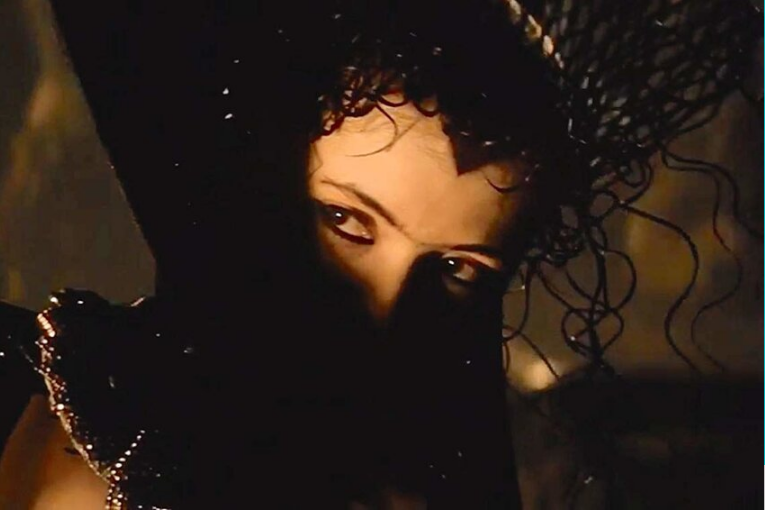
Eva (Mexican actress Simone Bucio, who has the serene face of Elina Löwensohn and the graceful, svelte form of Charlotte Gainbourg) works as a sound designer, somewhat akin to Toby Jones in Peter Strickland's Berberian Sound Studio, except she's really just a fill-in for the non-binary Zara (German-Columbian actor and filmmaker Simon(e) Jaikiriuma Paetau).
After her volatile sibling ends up in a mental institute for an indeterminate period of time, Eva takes it upon herself to complete their assignment, a Foley track for a commercial touting the mood stabilizer Equili, which features an actress in a stable, caring for and trotting on a horse (Jones's Berberian character also spends time working on a project, The Equestrian Vortex, with a horse-centric name). Using wooden boxes filled with hay, sand, and other substances, Eva turns to shoes as a percussive device and bites on a metal chain to duplicate the sound of a bit.
When she brings the recording to the director (Bjørn Melhus), resplendent in crushed-velvet spandex and Moe Howard hair, he lays into her, dismissing it as the work of a machine; there's no life to it. Though he looks like a cartoon--a refugee from one of Mike Myers' "Sprockets" skits for Saturday Night Live--she takes him literally when he suggests that she get out and do some living. He doubts she even knows anything about animals, so she communes with the horses at a local stable, thus opening her up to a whole new world.
Now, when she revisits the Foley track, she does so with greater understanding, essentially becoming the horse. This sound designer version of method acting leaves her feeling literally itchy as reality bleeds into fantasy, because the sensation signifies a new growth at the base of her spine. Unusually, it has her feeling more intrigued than perturbed.
Though she eventually visits a specialist who takes a series of X-rays, she doesn't stick around for a diagnosis or treatment plan. The lack of surprise on the doctor's face when she sees the fleshy growth jutting from her patient's posterior says a lot about this film's cool tone, despite Carlos Vasquez's warmly-lit, soft-edged, 16mm cinematography.
Piaffe--the word indicates a kind of dressage--isn't (body) horror, like either version of The Fly, but nor is it worlds away, because the transformation begins with a shift in Eva's personality before extending to her anatomy, exemplified by a disco sequence in which the normally soft-spoken woman has to yell and pound her fist to be heard, leading to a surprisingly sensual outcome.
In Stephen Frears' The Queen, the director portrays the royal leader as a woman who grew up isolated from quotidian life, making normal human interactions especially challenging. There's a remarkable sequence outside Balmoral in which Helen Mirren's QE2 locks eyes with a magnificent stag, and it's as if she's met the one creature in the world with whom she truly feels a connection, no matter how fleeting. In his Oscar-nominated screenplay, Peter Morgan wisely avoids any analysis or explanation.
That, to some extent, is what the horse in the Equili commercial becomes for Eva.
After all, a horse can't throw things at her, which Zara does when they finally consent to see her. Zara, who also has long dark hair, is as much a representation of Eva's bolder, shadow self as a blood relation.
In addition to the sound effects work, she has a day job overseeing a Quay Brothers-like Fotoplastikon made from wooden panels and clattering metal wheels that revolve and whir. The arcane device allows scientists like Dr. Novak (Dark's Sebastian Rudolph), an intense-looking, middle-aged botanist, to watch stop-motion footage of ferns growing and rustling through one of several brass viewfinders. He does so furtively, as if he were watching a sex loop.
In her new, more extroverted incarnation, Eva pays a visit to Dr. Novak's Botanical Institute, but he expresses little interest until she turns around, and he notices the full-sized tail she has made no effort to disguise. He's as blasé as the doctor, but also possibly turned on, and a unique sexual relationship ensues in which he handles her body the way he does his hermaphroditic ferns. It's sadomasochistic, and that's what she wants.
It's also less heteronormative than it may at first appear, since the growth beneath Eva's tail is very, very phallic. As Oren told Movieweb, "I mean, she's also inter-species in the end; she's intersex and inter-species."
Reality and fantasy continue to entwine as overhead lights flicker on and off and äbvsd's thumping techno music from the disco takes over the soundtrack even when Eva is just walking around town or riding the bus. She also imagines that Zara is spying on her assignations with the doctor--and maybe they are.
Piaffe, which expands on Oren's 2020 short Passage, isn't half as dark as Lynn Stopkewich's Kissed or Jane Campion's In the Cut, but it also centers a woman who can't feel pleasure--she can't even feel alive--without stepping way outside the bounds of convention. In those other films, it's through illicit and/or dangerous predilections like sex with the recently demised or potentially psychopathic, though Eva, like Molly Parker's funeral worker, prefers physical sensations to emotional entanglements.
Though the actors play it straight, and though there's nothing overtly humorous about the tone of the film, Oren and Brazilian co-writer Thais Guisasola embrace the ridiculousness built into the premise--though they avoid the groan-worthy horse puns dominating a few too many reviews.
Beyond the imperious commercial director and his chartreuse getup, another humorous sequence has Eva nailing metal plates to the soles of her shoes, so that they click when she walks, putting a trot-like spring in her step. It's funny, but also kind of sweet.
As in Peter Strickland's Berberian Sound Studio and Flux Gourmet, Oren uses sound as precisely as her central character. The score, primarily cello scrapings from Daniela Lunelli, aka Munsha, plays a secondary role to the sounds of brushing, clomping, and the squeaking of leather. Adding to the aesthetic appeal, Carlos Vasquez's tactile, yet dreamy cinematography brings Polish filmmakers Andrej Żuławski and Krzysztof Kieślowski to mind--specifically Possession and the Three Colors trilogy--in the way he uses intense, saturated reds (blood, roses, lipstick) and blues (disco lights, dresses). The colors become more vibrant in concert with the character.
Like Matthew Barney before her, Oren comes from the art world, and in interviews, she makes it clear that she has no intention of trading art for filmmaking, but rather continuing to work in both forms—and combining the two when possible. She's currently planning a third film, a short in the Passage/Piaffe series, and also preparing a second narrative feature.
As for Simone Bucio, I had no idea she wasn't German until after I watched the film. I never would've guessed. Granted, there's relatively little dialogue, but she blends in with the German cast. Like the actresses I mentioned at the outset, Elina Löwensohn and Charlotte Gainsbourg, she appears to share the same willingness to do whatever an adventurous, if supportive filmmaker asks of her. In the 2016 Mexican film Untamed, for instance, which takes direct inspiration from Possession--I'm sensing a pattern here--she plays a character who makes love with a sort of outer space squid.
Odd as it may be, the visually and sonically ravishing Piaffe--give or take the thumping techno--is the opposite of tragic or scary. Whether together or separately: I can't wait to see what Ann Oren and Simone Bucio do next.
If Universal had released Legend a year after Tony Scott's flyboy adventure Top Gun, 1986's box office champ, they just might have had a hit on their hands. Instead, this dark fairytale from Tony's older brother, Ridley, premiered in the UK the previous year.
Though 1983's Risky Business had secured Tom Cruise's leading man status, superstardom was yet to arrive. Instead, much like Sir Ridley's third feature, Blade Runner, Legend proved a box office disappointment. While the former would become a certified sci-fi classic, the latter has become an enduring cult favorite, now elaborately deconstructed by Arrow in a special edition set. One disc features the 89-minute US theatrical cut with Tangerine Dream score and the other features the superior 113-minute director's cut with Jerry Goldsmith score (this set omits Disney's 94-minute European cut).
In both, 17-year-old Mia Sara, who appeared in Ferris Bueller's Day Off around the same time, plays entitled royal Lili who jeopardizes the entire mortal world when she carelessly puts a beautiful white unicorn in harm's way, thereby creating an opportunity for the forces of evil, represented by a gaggle of goblins, to disempower the creature. She and Cruise's Jack, her forest friend and potential love interest, combine their talents to rescue the sole mare, lest the world be plunged into a permanent nighttime state (it's worth noting that my friend Bill Kennedy used to refer to this as Cruise's "snaggletooth" era; he hadn't yet gotten his teeth fixed).
Their friends include Oona, a Tinkerbell-like sprite (Annabelle Lanyon), and Gump, a mischievous elf (David Bennent, the wide-eyed former child star of Volker Schlöndorff's The Tin Drum). Their foes include the man-eating seahag Meg Mucklebones (Star Trek: Voyager's Robert Picardo) and above all, the demonic Darkness (Rocky Horror Picture Show's Tim Curry outfitted with lizard eyes, cloven hoofs, and ceiling-scraping horns).
Once Darkness spies the lovely Lili, he decides to make her his bride, no matter that she once told Jack she would marry the first man to retrieve a ring she tossed in the lake. If the two primary versions of the film end happily, one is more conventionally happy than the other. Though Sara, in her feature-film debut, and 22-year-old Cruise make for appealing leads, Curry's Darkness steals the show, thanks largely to painstaking makeup effects by The Thing's Rob Bottin that took up to five hours to apply.
The entire Arthur Rackham-inspired forest, constructed on Pinewood Studios' 007 Stage, also impresses with oversized trees, an authentic waterfall, and abundant flora and fauna. In his detailed commentary track on the director's cut, Scott notes that computer-generated imagery, which he would come to embrace in the ensuing years, can be more efficient, but isn't really cheaper than practical effects.
Other extras include an informative commentary track on the theatrical cut from Paul M. Sammon (Ridley Scott: The Making of His Movies), new and archival featurettes, storyboards, two drafts of Angel Heart screenwriter William Hjortsberg's script, and a 2003 documentary on the director.
Though Legend may never achieve full-on classic motion picture status, the more fleshed-out director's cut proves that Ridley Scott's lovingly-crafted fairytale always deserved better than it got from both film critics and paying audiences alike.
***** ***** ***** ***** *****
The Legend special edition set is available on Blu-ray from Arrow Video. Images from SyFy/Universal Pictures (Mia Sara as Black Lili), Yahoo! Life (Sara and unicorn), and the IMDb (Tim Curry as Darkness and the 1986 international one-sheet).
Marleen Gorris's directorial debut, A Question of Silence, isn't an unknown quantity. In its home country, the film generated controversy upon its original release, and feminist film scholars are as likely to mention it today when discussing the key titles of the 1980s, alongside Lizzie Borden's 1983 Born in Flames and 1986 Working Girls.
Outside of those circles, though, it's fairly obscure. It shouldn't be, but this isn't especially surprising, because the film arrived without the involvement of Paul Verhoeven or Rutger Hauer, the Dutch film figures with whom international audiences are most likely to be familiar (to be fair, Verhoeven's Dutch work will never be as well known here as his English work either).
Known or unknown, the central cast is terrific (more on them momentarily), but the writer/director isn't quite so obscure. Nonetheless, I wasn't familiar with the 1982 film until a friend introduced me to it last year.
The weird part: I had definitely heard of Marleen Gorris. Many people have, because she won the Oscar in 1996 for the unambiguously feminist Antonia's Line, but I had no idea, at the time, that it followed more confrontational work.
After her Academy Award win, Gorris would shift to English-language films, including a very good 1997 adaptation of Virginia Woolf's Mrs. Dalloway with Vanessa Redgrave and Natascha McElhone and a less-good 2000 adaptation of Nabokov's The Luzhin Defence with Emily Watson and John Turturro.
A Question of Silence and her 1984 follow-up, Broken Mirrors, are now available on Blu-ray from Cult Epics. Just as the Criterion Collection has sparked new interest in Borden's filmography--also available to stream through Kanopy and Max--wider availability should benefit Gorris's, too.
As with her Dutch counterpart, Borden would shift to a glossier register with subsequent work, like episodes of Silk Stalkings and Red Shoe Diaries.
As is often the case when a woman hasn't been able to make the projects she intended or when they fail to meet commercial expectations, both women stepped away from filmmaking after a few years in the big leagues.
Love Crimes, Borden's last solo directorial effort--which she disavowed after a disastrous experience with Miramax--was released in 1992, while Gorris's last feature film, 2009's Within the Whirlwind (also with Emily Watson), failed to land a distribution deal. She hasn't directed another motion picture since.
A Question of Silence proved she had the touch. Gorris's depiction of three seemingly ordinary Amsterdam women--who had never met before--committing a brutal crime, still has the ability to shock, not so much for the brutality, which she largely keeps off-screen, but for the lack of explanation, apology, or anything, really, that would help to make it all make sense.
Gorris scrambles the timeline from the start as police officers come to escort the suspects from their homes or places of business. Not one of them puts up a fight, though the middle-aged waitress, Ann (comic performer Nelly Frijda), wonders, "Who's going to look after my cat?" (Gorris never answers the question). The younger women include Andrea (Henriëtte Tol), a secretary, Christine (Edda Barends), a stay-at-home mom, and Janine (Cox Habbema), the court-appointed psychologist assigned to determine their fitness for trial (Barends and Habbema also appear in Broken Mirrors).
Throughout the film, Gorris depicts events from the recent past to define the women's day-to-day lives and to reveal what happened in the boutique on that fateful day. In the present, they meet with Janine in the brightly-lit, high-rise detention center. When she asks, "Why that man?," the defiant Andrea doesn't hesitate: "Why not?" If Ann would prefer to talk about her cat, her knitting, or her craving for chocolate--Janine makes sure she has what she needs--Christine says nothing at all, inspiring the original Dutch title, translated in English as The Silence of Christine M.
Absent her backstory, Andrea might seem like a lunatic, and yet when Janine meets with her boss, he states plainly, "She's my right hand." Nice words, but in meetings, her male colleagues brush off her suggestions as if she were a gnat, present the exact same suggestions, and bask in praise from the other men, who act as if they hadn't heard a word Andrea said. From the look on her face, it's clear this has been happening her entire life. The other women have similar stories. Why talk if no one will listen?
The three women randomly end up in the same boutique at the same time. When the salesman (Verhoeven favorite Dolf de Vries) catches Christine trying to shoplift a sweater, he shakes his head, gives her a stern look, and attempts to retrieve the merchandise, but then the other two women follow suit--they just don't like the cut of his jib. Soon, they're stomping and slicing the man with various shop implements, while the other women in the store watch in silence. Those women will end up in the courtroom during the trial.
As University of Amsterdam Professor Patricia Pisters notes, in her excellent commentary track, the women all represent different ages and classes.
Until the trial date arrives, Janine attempts to figure them out. To all appearances, she has a good life--a good job and a good marriage--but these less fortunate women don't strike her as fundamentally odd. "They are really very ordinary women," she tells her attorney husband, who isn't thrilled; he worries that bad publicity from the case will cause him to lose clients--he assumed his wife would recommend the insanity defense--except she believes that the women are sane. It's the world that's crazy.
Though all of the actresses play their roles exceptionally well, Cox Habbema stands out for the way her upstanding citizen slowly, but surely comes to see things from the defendants' point of view, no matter how hard her husband, the judge, and the prosecuting attorney try to convince her otherwise.
In some ways, it all plays as horror--an eerie electronic score reinforces that impression--but in others, it plays as non-fiction, generating an unusual tension. This may be because Gorris took inspiration from actual news items, including one in which two men murdered a woman in a fitting room.
Notably, she intended the script for Belgian filmmaker Chantal Akerman, who had depicted an ordinary widowed mother who makes a similarly shocking move in 1975's recent Sight and Sound poll winner Jeanne Dielman, 23 quai du Commerce, 1080 Bruxelles. And that may be why Akerman turned down the offer--she had been down this road before.
Akerman's rejection, then, allowed Gorris to prove that she was as much a director as a writer (Akerman literally suggested she direct it herself). Though it may not have been her intention, she gave Gorris the chance to prove herself, and she did--in the process, launching a nearly 30-year career. I'm sorry she isn't still at it, but she definitely made her mark.
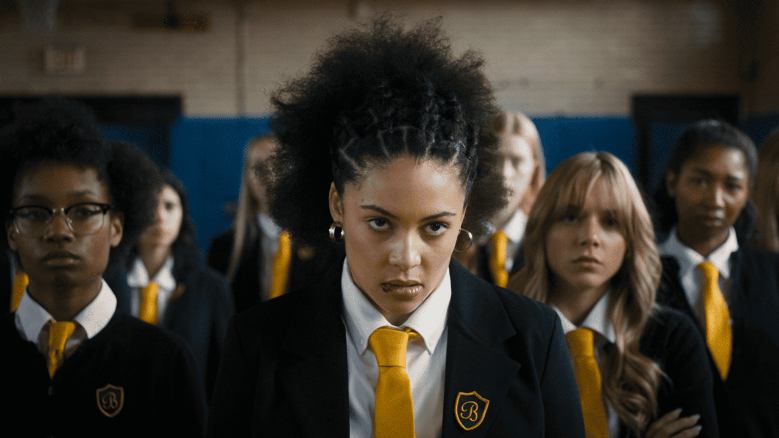
A killer of young women stalks Chicago just as a 17-year-old girl develops strange new powers--these two developments will eventually converge in Jennifer Reeder's blood-soaked coming-of-rage story.
Much like Halloween, Perpetrator opens from the killer's vantage point. It's late, and a young woman with long wavy hair wearing a pink fur coat walks down a suburban sidewalk. The stalker's breath plays on the soundtrack. The woman looks around from time to time as if she senses that someone might be following her, doesn't see anything, and keeps moving.
Finally, she turns around to face an all-consuming light. The screen fills with whiteness. When shapes snap back into focus, she's in a shadowy room, sleeping a drug-induced slumber. A masked man leans over to speak to her dozing figure: "Girls like you just don't know what you've got until it's gone."
Reeder then switches gears to introduce the film's true protagonist, 17-year-old Jonquil "Jonny" Baptiste (Chicago native Kiah McKirnan, last seen in Night Sky), breaking into a well-appointed home. She grabs a bottle of pills and stuffs a silver-sequined dress and matching heels into her handbag. Afterward, she fences the other small items she grabbed, mostly rare books.
Once home, she hands the money and the pills to her father, Gene (Knives and Skin's Tim Hopper), as "rent." He downs a dose. While he stares at himself in the bathroom mirror as his face appears to warp and woof–which doesn't look like much fun–Jonny models the dress in her bedroom, but when she checks in on him, he's passed out on the floor in a pool of blood. He will revive, but before he does, she considers splitting the weird scene.
Jonny changes her mind at the last minute, but then Gene receives a call from her Great Aunt Hildie (Alicia Silverstone), who says, essentially, "It's time," so he puts Jonny on a train, explaining that he needs to get his head together. Hildie, who resides in an elegant, dimly-lit walk-up, looks like a goth fatale with her Catherine Deneuve-in-The Hunger hair and blood-red lipstick (Silverstone watched Tony Scott's film to prepare; it knocked her out). Jonny moves in and prepares for senior year at her new school.
From the start, Hildie doesn't seem as if she means Jonny any harm, but she gazes at her oddly and has a very precise way of talking, as if she attended a mid-century finishing school--and she does suggest that she's been around for a few lifetimes. Silverstone is very good in a part some may find overly-mannered, but I could have used more of her arched-eyebrow oddness.
Everything about the situation suggests that Jonny is undergoing a physical transformation of some kind--her heart rate quickens, her nose keeps bleeding--and that Hildie is her mother. Or knows what happened to her.
If Jonny is as much of an outcast at her new school as she was at the old one, the school itself is pretty strange. The nurse (Audrey Francis) asks invasive questions and has the bruising and facial gauze indicative of a nose job (by the end, her head will be swaddled in gauze and surgical bandages).
Principal Burke (Christopher Lowell) is also an odd one. The way he speaks to the girls about safety, while a killer is on the loose, strikes an off-key note, and he seems to be having too much fun during active-shooter drills. Clearly, he's up to no good, but he isn't the only bad guy in the scenario.
To judge by Lowell's career since Veronica Mars, I might have assumed better intentions, since he started out by playing good guys, but after Promising Young Woman, it comes as little surprise that Burke's enthusiastic demeanor disguises pretty dark desires (that said, Lowell's performance as Bash, the energetic producer on GLOW, remains his finest to date).
It doesn't help that Jonny brings her penchant for petty crime to the new neighborhood, except Hildie doesn't reward her for her transgressions the way Gene did--on the contrary, she punishes her--but she still finds a way to break the rules to curry favor with her favorite classmates (played by Casimire Jollette, Ilirida Memedovski, and Knives ands Skin's Ireon Roach; all quite good).
All the while, she experiences strange bleeding episodes, which arrive with alternately trippy and squishy imagery--some of which recalls the kaleidoscopic point of view of the mutant baby in Larry Cohen's It’s Alive–including an unidentifiable figure swimming through crimson-hued waters.
Once Jonny passes the threshold from 17 to 18, Hildie explains what's happening to her. She isn't a vampire, but something else altogether, though it also involves blood. Not to give too much away, but she acquires a kind of radical empathy, allowing her to feel what others feel--including those no longer among the living--and even to project their essence. Once she gets a handle on the thing, she decides to use her powers to catch the killer.
Soon she ends up in the same place as the victim from the prologue, giving her a chance to put her newfound skills to the test, except things don't end there. Her physical reactions and escape maneuvers will come to involve the other girls, both those the killer abducted and those not yet targeted.
Along the way, Jonny has a same-sex fling, which could turn out to be something more, and learns about the true nature of her parentage. The tech credits, including returning composer and Yeah Yeah Yeahs guitarist and keyboard player Nick Zinner's synth-based score, contribute to a compelling, if not especially scary atmosphere, though I'm not sure scary was exactly what Reeder was going for, since Perpetrator incorporates elements of satire that echo previous high school and high school-haunted feminist horror stories, from Buffy the Vampire Slayer to Jennifer's Body.
If anything, Reeder's fifth and most ambitious feature to date--I've also written favorably about Signature Move and Knives and Skin–doesn't lack for ideas, and she manages to stitch all of them together at the end, but it still feels as if she could've pared things down a notch or two. Jonny's queerness, for instance, doesn't manifest until the end. Reeder doesn't explore it in any way, and yet it seems that it could have been integrated into the narrative more significantly, especially since her body is rapidly changing (she only considers a fling with a straight boy for tactical reasons).
Fortunately, Kiah McKirnan, who made her national debut in HBO's riveting Mare of Easttown, handles Jonny's every change with aplomb. Not counting a 2016 short, she's only been acting in earnest for three years, and her inexperience shows at times, but her spirit and conviction compensates for any minor awkwardness, and I look forward to seeing more of her work.
In the end, though, what drew me to Perpetrator, beyond Jennifer Reeder's work, was the participation of Silverstone. Hollywood doesn't always know what to do with former teen stars, and she made a lot of unsatisfying moves after the triumph of Amy Heckerling's Clueless, but ever since she played a grieving mother in Yorgos Lanthimos's The Killing of a Sacred Deer, I've wanted to see her explore the darker side of her persona. It's an opportunity with which Goodnight, Mommy filmmakers Severin Fiala and Veronika Franz also provided her in The Lodge, featuring her doppelganger Riley Keogh.
To Filmmaker magazine, Jennifer Reeder said of Alicia Silverstone," Now I just want to make the rest of my films with her," and in Perpetrator's production notes--in addition to most every interview she's given about the film--Silverstone says she would also love to continue to work with Reeder. I truly hope it happens–she's the best reason to see the film.
Perpetrator opens in select theaters on August 28 and premieres on Shudder on September 1. Images from the IMDb (Alicia Silverstone), WTFilms (Kiah McKirnan), Mashable (multi-exposure still), and Wikipedia (poster).
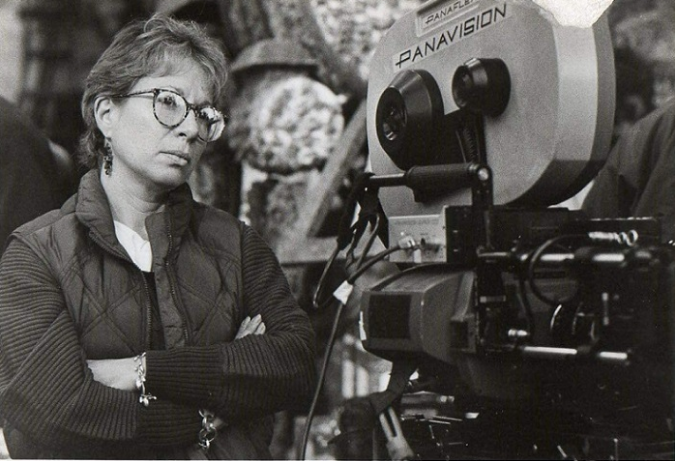
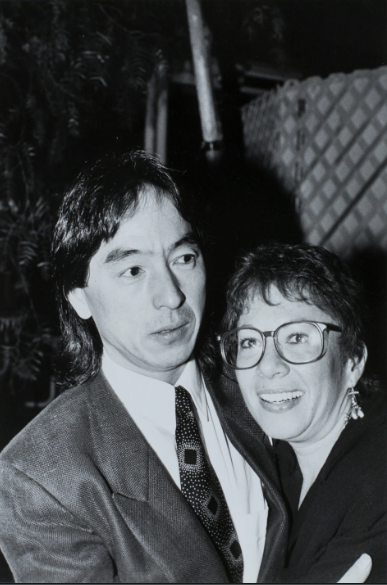
When Fran Rubel Kuzui made Tokyo Pop, she was truly writing what she knew as an American who divides her time between the US and her husband Kaz Kuzui's native Japan (Lynn Grossman served as cowriter).
In Kuzui's directorial debut, 25-year-old Carrie Hamilton, whose hair length changes from scene to scene, plays Wendy, an aspiring New Jersey songwriter who struggles to find singing gigs. When a friend sends her a "wish you were here" postcard featuring an image of Mt. Fiji, she spontaneously decides to move to Japan. After all, some American musicians have had better luck in Asia--maybe she'll be one of them.
She soon finds herself in neon-lit Tokyo. She doesn't speak the language, her friend moved to Thailand without telling her, and she has nowhere to stay, but when she spots a fellow American, they direct her to a Mickey Mouse-inspired hostel for gaijin or non-Japanese (interestingly, the American is trans). Next she just needs a job that doesn't require a work visa.
One of the tenants suggests a hostess job, and so that's how she ends up working in a karaoke bar.
Hamilton's costar, Yutaka "Diamond Yukai" Tadokoro of the Red Warriors, makes his first appearance during the Keith Haring-designed opening credits with a turbo-charged take on Carl Perkins' "Blue Suede Shoes." Tadokoro plays Hiro, a rock singer considering adding some kind of gimmick--like a gaijin---to lend his band a competitive advantage.
Wendy and Hiro run into each other late one night at a noodle stand. His band mates bet him that he can't pick her up, but she's missed the last train home and can't afford a hotel, so he offers to help, but language and cultural barriers lead her to believe he might be a creep--or that he thinks she's a working girl--but he does solve her immediate problem.
The following (very platonic) morning, they go their separate ways. The next time Wendy runs into Hiro, she tries to blow him off, but he's persistent in a goofy kind of way, and she agrees to have a drink with him. If Wendy looks like a punker with her bleach-blonde hair and fishnet stockings, Hiro looks like a rocker with his teased hair and black leather, though as the title indicates: the music they end up making isn't really either. It's...Tokyo pop.
For their first date, Wendy and Hiro take in a noise band with a gender-bending singer. If the couple is clearly coded as straight and cisgender, I appreciate Kuzui's nonchalant handling of the gender-fluid individuals in their midst.
By the end of the night, Wendy no longer has misgivings about Hiro, especially after she initiates him into the art of unhurried lovemaking, a new concept to a guy who sees getting undressed for sex as a waste of time. Though he enjoys showing her around Tokyo and teaching her Japanese, Hiro prefers American culture. Wendy, unsuccessfully, encourages him to sing in Japanese, rather than covering English-language hits exclusively.
This creates tension, because she wants to write her own ticket, while Hiro's band wants to install her as their front person, and he feels caught in the middle, because he likes Wendy, but doesn't want to give up his spot.
Wendy is also forthright in a way that doesn't just mark her as an American, but as a feminist, and most of the male musicians she meets are flummoxed--if not put off--by her brash persona. She's tall, blonde, non-subservient; a dream to some Japanese men...and a nightmare to others.
When she finally joins Hiro's band, it's more as a co-lead than front person--though the press focuses on her more--and they still have to figure out how to get star-making manager Dota (You Only Live Twice's Tetsurô Tanba) to listen to their demo, leading to some rather amusing stunts that eventually pay off, though not as intended. (Fun fact: the band X, which Stephen Kijak profiled in the 2016 documentary We Are X, makes a brief appearance as Dota associates--I recognized them immediately by their sky-high hair.) If Wendy's dream of pop stardom comes true, she finds that becoming "Big in Japan" comes with hidden costs for which she wasn't prepared.
In the end, both she and Hiro have to find ways to be true to themselves, and it won't come from fronting a Japanese-American band that specializes in Carole King and Lovin' Spoonful covers. Though Kuzui grapples with cross-cultural relationships and, to a lesser extent, cultural appropriation, Tokyo Pop mostly revolves around authenticity, however the performer in question defines it. It's an ending that predicts, or at least predates, the conclusion to Allison Anders' 1996 King-inspired film, Grace of My Heart.
Hamilton, who spent two seasons on the NBC version of Fame--I used to watch it faithfully--isn't a bad singer, though she isn't quite as good as the more experienced Tadokoro, but then, as a punk-adjacent singer, she doesn't need to be too good, much like the just-good-enough Diane Lane in the Nancy Dowd-penned Ladies and Gentlemen, the Fabulous Stains.
But it's Tadokoro who pulls off an acapella "Natural Woman"--he titled his memoir Natural Man--while also proving he's an adept guitarist. If he isn't Hamilton's equal as an actor, it may be due in part to the amount of English dialogue he has to deliver (his band mates speak entirely in Japanese).
Then there's Hamilton's parentage. As the oldest child of prime time superstar Carol Burnett, it may have seemed like a stretch for her to convincingly play a woman living on the edge, but Hamilton was a famously wild child. As with Drew Barrymore, though 11 years apart in age, she got drug addiction out of her system early on, and was reportedly clean and sober by the time she made this film. It's possible that this experience fed into her performance, because she's convincing in most every way.
In a recent New York Times piece on the film, director Kuzui only remembers Hamilton understandably balking at the way the bleach they used caused her hair to fall out. I suspect this may be why the length varies from scene to scene--and why Wendy wears so many headbands and headscarves--and not strictly due to budgetary or continuity issues.
Despite good notices from critics, Kuzui's distributor, International Spectrafilm, went belly up, and that was pretty much the end of that, even with a coveted berth at the Cannes Film Festival. It parallels the trajectory of a few other 1980s films about punk-inspired female musicians--like Allan Moyle's similarly underseen, undervalued Times Square--that are finally getting their due by way of new restorations and home-video releases.
Only one year later, another American director made a film about a Japanese fan of American music--Carl Perkins above all--and found himself with a modest hit on his hands. The film: Mystery Train. Kuzui, unfortunately, didn't have Jim Jarmusch's name recognition. And despite her long career in show business, she still doesn't.
After Tokyo Pop, Carrie Hamilton continued to act, but she never top-lined another film. One of her last, most noteworthy roles arrived with The X-Files season six episode "Monday," in which her character, Pam, has to live the same disastrous day over and over again, unless Mulder and Scully can find a way to break the cycle. She's very good in a desperate, feverish part miles away from the optimistic young musician she plays here.
Hamilton died in 2003 of pneumonia caused by lung and brain cancer at 38.
Ever since, her mother, with whom she worked frequently, has done everything possible to keep her name alive, including her participation in the 4K restoration of this film with Dolly Parton and Jane Fonda via IndieCollect's Fund for Women Directors. Not an obvious choice when it comes to shoestring-budget productions, it's possible Kuzui recruited Dolly through her alliance with the country star, Fonda's friendship (dating back to 9 to 5), or because Dolly's production company with Sandy Gallin, Sandollar, produced both Buffy and Angel--all three things might also be true.
More happily, Kuzui didn't give up, even though she couldn't get her next project off the ground, and ended up having to abandon it.
Then she came across Joss Whedon's script for Buffy the Vampire Slayer, and knew she had to adapt it, this time with major studio backing and name-brand stars. She and her husband, who produced the 1992 horror comedy, would thereafter land production credits on both Buffy and Angel. Though Kuzui never directed another feature film, she and Kaz have worked primarily as distributors of Japanese films for the American market ever since.
Tadokoro has also remained active as an actor, musician, and variety show staple. Most cinephiles are likely to recognize him as the Suntory commercial director in Sofia Coppola's Lost in Translation, a film inspired by her travels in Japan, and one that may have also taken inspiration--at least spiritually--from Fran Rubel Kuzui's American-in-Japan predecessor.
It's truly gratifying to see Kuzui and Hamilton finally getting their due.
This month, 35 years after the fact, marks the premiere of Tokyo Pop in the US. It plays exclusively in Seattle at The Beacon Cinema on Saturday, August 26, and Wednesday, August 30. Kino Lorber will be releasing it on Blu-ray with a Fran Rubel Kuzui commentary track on December 5. Images from Kino Lorber, Filmink (Fran at work), and Buffy Fandom (Fran and Kaz).
"I really see Earth as a conceptual art project."--Bruce Pavitt
"Grossly unacknowledged and underappreciated in Seattle, and far more popular overseas, Earth is a study in perseverance and patience."--Clyde Petersen
After watching Clyde Petersen's film about the band Earth, I'm convinced he was the only person who could--and should--have made it.
It isn't just because the artist, filmmaker, and musician has played with founder Dylan Carlson, even managing his band for five years, but because his allusive style suits their patient, lumbering music and the mossy Pacific Northwest environs from which they originated. (When I saw the Breeders in 2018, Petersen's band, Your Heart Breaks, opened, with Carlson on guitar.)
This isn't a conventional, talking-head documentary, though members, past and present alike, recount their history with the band via voice-over. The use of the 4:3 aspect ratio, black-and-white and faded Super 8mm imagery (shot by six camera operators, including Petersen and Benjamin Kasulke), slow pans, and steady, measured pace make most other music profiles seem hectic and busy or dull and workmanlike in comparison.
Now a duo, the band began as Eights n' Aces in Olympia in 1985 with Slim Moon (Kill Rock Stars) on vocals. I have no recollection of this incarnation, though I didn't move to the Northwest until 1988, right as Mudhoney and Soundgarden were just getting started. The band that would become Earth shared practice space with Kurt Cobain. Slim recalls that Kurt, who became Dylan's best friend, wrote much of Nevermind on the ramshackle property.
Dylan, who was wearing flannel before flannel became a thing, had specific ideas about the heavy music he wanted to make. Slim had other ideas, and they parted ways, though it's possible he might not have founded Kill Rock Stars without the impetus the experience gave him to be his own boss and do his own thing--Slim also credits Dylan with introducing Kurt to flannel.
Through the years, several other musicians, like drummer Michael J. McDonald, would cycle through before Dylan and Adrienne Davies connected in 2000. She describes Dylan as "the well-read redneck" (he and producer Randall Dunn developed an obsession with author Cormac McCarthy).
Adrienne's voice-over description of the evolution of her drumming, which plays over a visual sequence of elegant, slow-motion pounding, goes into fascinating depth. Though it isn't mentioned in the documentary, Dylan and Adrienne were married for a time. Much like Sam Coomes and Janet Weiss of Quasi and Meg and Jack White of the White Stripes, their musical partnership survived the dissolution of their marriage.
Other speakers include guitarist Bill Frisell, bassist Karl Blau, cellist Lori Goldston, and Sub Pop's Jonathan Poneman and Bruce Pavitt. Altogether, over 30 musicians have played with Earth. I have no idea what kinds of prompts Petersen provided, but their words range from the historical to the philosophical, including frank talk about substance abuse. To Caustic Resin guitarist Brett Netson, opiates made life in Boise, Idaho more tolerable, concluding, "Whatever it gives you, it takes back 10 times as much."
In addition to talk about Carlson's on-and-off drug use and scrapes with the law, Petersen doesn't shy away from his connection to Kurt Cobain's suicide. It's something that's always disturbed me to the extent that I've found it hard to separate that knowledge from him and his work.
Simply put: Carlson purchased the gun with which Cobain killed himself. They were good friends. And heroin addicts. Everything about the situation was fucked up, but I'm glad Carlson has seriously grappled with it, rather than trying to pretend it didn't happen or that he wasn't involved.
As much as it's about Earth, Even Hell Has Its Heroes is about friendship, aging, art, commerce, and Old Seattle. There are people who are gone, like guitarist Sean McElligot, and venues that are gone, like Gorilla Gardens, that only exist as phantoms through photographs, handbills, and posters.
There's also plenty of music, most of which was created specifically for the film and the soundtrack, as Petersen told Dave Segal of The Stranger. Beyond the live footage, he uses the music to score evocative images of the Northwest, from foliage to ferries, trees to freight trains. This aspect of the film recalls A.J. Schnack's 2006 documentary, Kurt Cobain: About a Son, which trades talking heads for images of Kurt's stomping grounds.
Of the Seattle bands active in the 1980s, only so many are still active today. From Cobain to Chris Cornell to Mark Lanegan, only so many are even alive (Petersen had hoped to include the former Screaming Trees front man, but the timing was off). The filmmaker doesn't necessarily explain that longevity, but this is the kind of film that embraces ambiguity, and Earth's relentlessness manages to seem simultaneously inevitable and miraculous.
I believe that the best music documentaries work as films in and of themselves, whether viewers approach them as fans of the subject or not. Even Hell Has Its Heroes is among the best music documentaries I've ever seen, because Petersen creates a distinct mood and vibe rather than an illustrated encyclopedia of facts. He creates a feel for the music, the people who made it, where they came from, and the relationships they forged.
The full-length feature is only Petersen's second after 2016's road trip-shaped memoir Torrey Pines, which made extensive use of stop-motion animation. Other than their basis in non-fiction, these are very different films in look, theme, and tone. It will be as interesting to see what Peterson does next as it will be to see what Earth does next--may he share their admirable ability to weather all storms and to keep chasing the muse wherever it takes him.
Even Hell Has Its Heroes will be coming (back) to Seattle on Sept 2-3 at SIFF Film Center during Bumbershoot and Sept 16 at Northwest Film Forum during Local Sightings, and Chicago on Sept 16-17 at Harper Theater during the Chicago Underground Film Festival. The latest Your Heart Breaks album, The Wrack Line, is out now on Kill Rock Stars. Image of Carlson, Cobain, and Lanegan in 1992 from Instagram. All others from Clyde Petersen.
Greta Gerwig has been trying to sell out, as it were, for over a decade now. That isn't intended as a critique, though it could certainly be taken that way; it's just that, in recent interviews, she's made it clear that the $145-million Barbie doesn't represent a sudden swerve away from her independent film career, but rather the end goal she's sought all along. Considering the trajectory of her career since 2006, when she made her feature film debut in Joe Swanberg's LOL, this makes perfect sense.
In 2011, after appearing in 14 more, modestly-budgeted films--some strung together with barely any budget at all--she appeared in her first big studio picture, 2011's highly unnecessary remake of 1981's original Arthur.
Gerwig wasn't cast as a lead, but she had a significant role. As the headline to Eric Kohn's Indiewire review put it, "Greta Gerwig Is a Mumblecore Prop in Arthur." Her participation was the post-millennial equivalent of Parker Posey bringing her screwball charm to Nora Ephron's 1998 You've Got Mail, which was also a remake of a kind (an interpolation of 1940's The Shop Around the Corner). Unfortunately, this Arthur was a charmless affair.
The original Arthur wasn't about the script so much as the power trio of Dudley Moore, Liza Minnelli, and Sir John Gielgud striking sparks off each other. They were not replaceable, and definitely not by Russell Brand, Helen Mirren, and Jennifer Garner--one of whom has since become a notorious conspiracy theorist (Mirren, incidentally, serves as Barbie's narrator).
It isn't Gerwig's fault Arthur was a flop--any more than she's to blame for Brand's anti-vax views--and it probably provided her with some valuable insights into the world of the big studio production.
From the start, the Barnard graduate has proven herself a keen student of the movie-making machinery, so I would be surprised if she completely regrets her participation in Arthur, not least when it may have taught her what not to do.
As Kohn concludes in his not-completely-critical review, "Gerwig is now readily marketable." It's also fortunate for her that most people don't remember the movie--if they knew about it at all.
If Arthur had been a success, however, it may have hastened the way to projects on a larger scale. As it is, the scale of the projects did increase, but more gradually. The next year, 2012, she worked with both Woody Allen and Noah Baumbach, who would become her personal and professional partner (he cowrote Barbie; she cowrote Frances HaandMistress America).
I wouldn't call her participation in their films sellout moves by any means. That moment would arrive in 2014.
That year, she was cast as the lead in the CBS spin-off of How I Met Your Mother: How I Met Your Dad. Twitter exploded in condemnation, but the clamor was quickly shut down by supporters insisting it was her life, her career--she should do whatever she wants with it. Also, was it really so bad? Well, it could have been worse, but to judge by the trailer and the excerpts from the pilot--all available on YouTube--the sitcom probably wouldn't have lasted too long. We'll never know for sure, because CBS didn't exercise the option to bring it to series.
We'll also never know if the success of a network series--a considerable drain on a lead actor's time and energy--would have allowed her to do all of the acclaimed work she did afterward, but it seems likely that the trajectory would have crawled to a slower, less steady pace. Instead, she segued from acting and co-writing to writing and directing, as a solo act, two Oscar-nominated films, Lady Bird--which plays like a prequel to Baumbach's Frances Ha--and the lovely Louisa May Alcott adaptation Little Women.
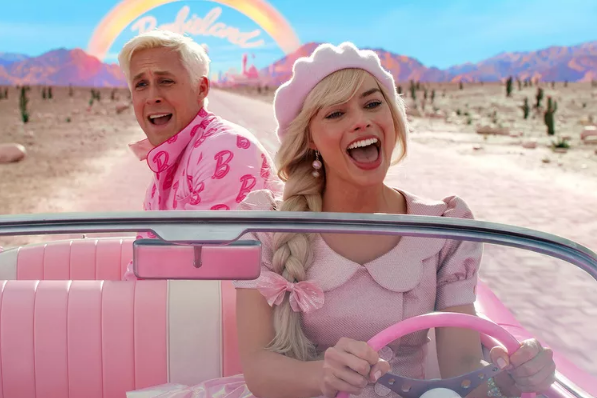
That brings us to Barbie, Gerwig's ultimate sellout move. More charitably, it's the kind of big budget production she's long dreamed of making. I believe both things to be true, and unlike her other attempts, this one can't fail. Mattel Films and Warner Brothers have successfully stoked the fires with their scorched earth campaign--including over 100 brand partnerships. At this point, it really doesn't matter whether critics embrace it or not.
Part Two: Barbie(The Toy) and Me
I played with Barbie when I was a kid. My mom was a feminist, and yet I don't recall any discomfort on her part. I think she knew I wasn't about to look to a 11.5-inch molded plastic figure as a role model, but rather a living, breathing woman--like her. In Barbie, Gloria (an excellent America Ferrera) represents that sort of person: a normal-looking woman with a husband, a daughter, and a nice, if non-dreamy house. She also works at Mattel.
Gloria sets the plot in motion when nostalgia spurs her to excavate the Barbie doll (played by a perfectly cast Margot Robbie in the movie's alternate reality) she told her preteen daughter, Sasha (former Disney Channel star Ariana Greenblatt), she had discarded. In private, she sketches versions of Barbie meant to reflect feelings about her humdrum life and the chasm growing between her and her sarcastic, black-clad daughter: Depression Barbie, Thoughts of Impending Death Barbie--that sort of thing.
In Barbieland, beautiful, flawless Barbie wakes up one morning to find that human frailty has found her, except she isn't human. Or is she? Gloria's actions have caused the real world to come crashing into the fake Mattel version where everything is pink and shiny and happy. Until it isn't.
As a kid, my life wasn't perfect, but it wasn't bad. We weren't middle-class, we were low income, but I always had a roof over my head, clothes on my back, food to eat, and toys--Barbie among them. I'm pretty sure I never had more than one at a time. No Ken, no Skipper; just Barbie.
In the months leading up to Barbie's release, I've read dozens of articles about the making and marketing of the movie, the history of the doll (much of which Gerwig depicts), and the launch of Mattel Films, an IP juggernaut designed to bring all of their best known properties to big-screen life, from Barney to Polly Pocket to Magic 8 Ball--the latter as a horror comedy.
Not one of these pieces mentioned Barbie in relation to income, and yet Barbie costs money. Even as a kid, I could tell the difference between an authentic one and a knockoff, but that's all some parents could afford.
I may have had the real thing, but I didn't have the Dreamhouse or the hot pink boxes of perfectly coordinated outfits. Instead, I built Barbie a world out of anything I could find. Just as my crafty mom was handy with a sewing machine or a set of knitting needles, I was handy with glue, tape, cardboard, and needle and thread. In a way, you could say that Barbie--as much as necessity--taught me the value of creativity and resourcefulness.
Much like the movie's Sasha, though, I eventually lost interest. I don't remember how or when, but other things took precedence and I forgot all about Barbie. This went on for years until 1998 when Mattel, in conjunction with Paramount Pictures, came out with a "Special Edition Holly Golightly in Breakfast at Tiffany's" Barbie, part of the Audrey Hepburn Collection--notably, the box doesn't say "Barbie" anywhere on it. This beautifully-designed doll came with sunglasses, a rhinestone tiara, long black gloves (which my cat nibbled on), a white stole--even a cup of (fake) coffee.
That same year, I bought the "Far Out Barbie," part of the Twist 'n' Turn or TNT Collection, a revival of a mod 1960s line. I won't deny that a big part of the appeal was her resemblance to Catherine Deneuve in The Umbrellas of Cherbourg, right down to her candy-colored shift dress, straight blonde hair, and pink hair ribbon. In interviews, Gerwig has specifically cited Jacques Demy's 1964 musical as an inspiration on Barbie.
For a brief moment in time, I was back in the Barbie biz, spurred by the fact that I was working at a certain online retailer that had just launched a toy store. I lost interest again until 2008 when Mattel released the pièce de résistance of collector's editions: the "Alfred Hitchcock's The Birds" Barbie, part of the Black Label Collection.
Though Tippi Hedren's name is regrettably absent from the front of the box, this is another beautifully-designed doll.
Hedren's character, Melanie, wears a snazzy mint ensemble, stylish camel heels, a smart brown handbag--and she's being pecked at by crows. One has even loosened a piece of blonde hair from her upswept hairdo, just as in the 1963 psychological thriller, in which a pretty woman with a dark past sets a small town--and its corvus--aflame. Alas, the doll sold out quickly, I didn't act fast enough, and that was the end of that.
The Birds doll was as subversive as Barbie would get. Unless you count Earring Magic Ken.
Part Three: Commercials Aren't So Bad
Barbie, the movie, is essentially a long-form commercial. Despite my history with Gerwig and with Barbie, I attended the preview screening more out of curiosity than anticipation due to the relentless marketing, the unfunny trailer ("I'll beach you off any day!"), and the fear that, like most corporate products, it means to be all things to all people. My fears were not unjustified, and not every joke lands, but many do. I laughed. Often.
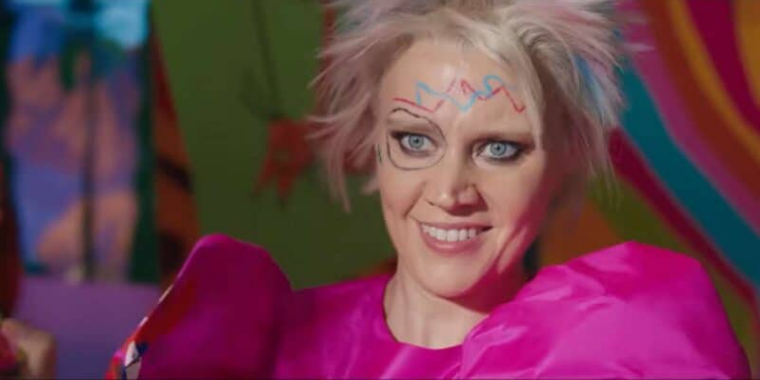
Michael Cera as Ken's forgotten friend, Allan, is particularly amusing in a rather poignant way. Unlike so-called Weird Barbie (Kate McKinnon in fine form), he fits right in, and therein lies his problem, but not ours (we're just observers).
Mattel created Allan to serve as Ken's companion. He has no special skills, he's unexceptional-looking--though I find him cuter than male-model Ken (played by a very buff, very game Ryan Gosling)--he's so unremarkable he's practically invisible, and everyone ignores him. Gerwig depicts the phenomenon in a humorous way, but it's a real problem for real people. There are kids--and adults--who feel exactly the same way, and Allan speaks for them in a way that Barbie, Ken, and all the other perfect Barbies don't.
Between Gloria, Allan, Weird Barbie, and even Robbie's Stereotypical Barbie, the film's designated Pinocchio--she just wants to be a real woman--Gerwig has injected this corporate product with genuine feeling, but no matter how often she references Demy and Jacques Tati in interviews--and she's nothing if not film literate--Barbie is still a commercial. And here's where I break from the pack. Not so much in my opinion of the movie, but in my opinion of commercials: they get a bad rap. Sure, many are uninspired, but not all. In fact, many used to run on inspiration, and every year at their Oscars equivalent, the Clio Awards, the most inspired receive recognition.
With the rise of streaming, anti-commercial animus has grown stronger than ever. It's also easier to skip commercials, so Madison Ave has grown sneakier and more aggressive. It's a bummer, and I'm not thrilled about it either, but when I was young, commercials weren't just more readily accepted--or at least tolerated--they were part of the currency. We'd quote them ("Hey Mikey, he likes it!"), sing the catchiest jingles, laugh at the goofiest stuff, weep over the neglected dogs and cats--you name it.
Plenty of major directors have made commercials over the years, and not just to gain experience, but to make some coin between their more personal projects. That doesn't mean they didn't bring their A game. Ridley Scott's 1984-inspired Super Bowl ad for the Apple Macintosh computer is still considered a model of the form. David Lynch, Spike Lee, Wes Anderson, and many others have made commercials or PSAs in their own unique style.
But there's a difference between making short-form commercials and long-form theatrical releases backed by toy companies that feature dozens of their dolls, including several that wouldn't exist without the movie, like "Barbie the Movie Margot Robbie as Barbie In Pink Gingham Dress" and "Barbie the Movie Ken Doll Wearing Pastel Striped Beach Matching Set."
In Alex Barasch's illuminating and troubling New Yorker piece about the launch of Mattel Films, "After 'Barbie,' Mattel Is Raiding Its Entire Toybox," a company spokeswoman swears the movie isn't about selling toys. Bullshit. It's obviously about selling toys and ancillary products. I'm less concerned about a company finding an entertaining, people-pleasing way to sell their products than the sheer gall to deny that that's a motivating factor.
Ultimately, it's the disingenuousness of the movie's makers and funders that bums me out almost as much as the fact that the last thing today's troubled film culture needs is another MCU monopolizing all of the screens at the multiplex--and even art house theaters--and because audiences are being trained only to want more of what they already have, though I realize it's unreasonable to expect Gerwig or Robbie, who produced the movie, to speak in those terms.
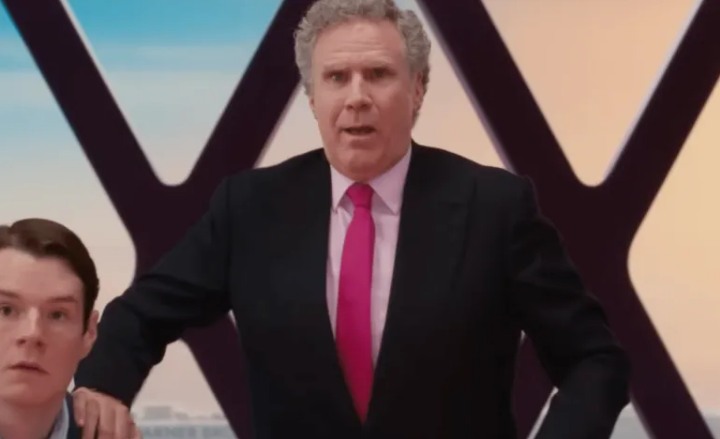
I approached Barbie as the commercial that it is, and on that level, I enjoyed it. At times, I was even moved. Millions of other viewers will enjoy it for everything it appears to be on the surface, much as Dorothy harbors idealistic ideas about the Wizard of Oz--another one of Barbie's classic film references--until she realizes it's all a mirage. Oz isn't as great or as powerful as he appears. Like Will Ferrell's Mattel honcho in the movie, he's just the cowardly man behind the curtain. Dorothy, a mere slip of a farm girl, is the one who's brave and strong and true--a feminist hero for the ages (kind of bizarre that, in the Arthur remake, Gerwig plays a version of the role that originally went to Judy Garland's daughter, Liza Minnelli).
I'm not the first person to make this observation, and I won't be the last, but subversion isn't the same as self-awareness. Barbie is one, but it isn't the other. Gerwig and co-writer Baumbach poke gentle fun at Mattel, but by her own admission, they had to run everything by the studio brass. There were a few disagreements along the way--the studio wasn't fond of the term Stereotypical Barbie--but in the end, they worked everything out. I appreciate the way the couple pokes the bear, but I wouldn't say they drew blood, and nor would I have expected them to get away with it if they tried.
Part Four: Why Pick on Greta?
Why indeed. I think it was former New York Times film critic Janet Maslin--though I can no longer find the tweet--who questioned why men aren't subject to as much criticism as Greta Gerwig when they segue from independent features to big studio productions. It's largely true, except few men have had a career that looks anything like hers.
For one thing, she started out as an actress, though she was writing for the screen as early as Joe Swanberg's 2007 Hannah Takes the Stairs and directing as early as 2008's Nights and Weekends, a Swanberg co-directorial effort. Fifteen years elapsed between the $15K budget Nights and Barbie.
It's partly due to sexism, no doubt, but it's not that simple. Gareth Edwards made one independent, 2010's Monsters, before he was handed the reins to 2014's Godzilla, while Colin Trevorrow also made one independent, 2012's Safety Not Guaranteed (starring former Gerwig associate Mark Duplass), before he was handed the reins to 2015's Jurassic World. Both worked on Star Wars features, too. It just doesn't happen that fast for women.
By my count, Gerwig appeared in 26 feature films (not counting voice work) prior to Barbie. Consequently, she came to be seen as an Indie Queen. Edwards, Trevorrow, and the like--usually white and male--didn't spend as much time in the indie trenches, so it's less likely anyone sees them as sellouts. Opportunists, maybe, but that isn't the same thing.
With Gerwig, there was always the sense that independent cinema meant a great deal to her, and so fans have felt disappointed by what seems like an about-face, even if it really isn't.
Gerwig worked hard, she paid her dues, she repeatedly tried to sell out, and she kept trying until she succeeded.
In a way, she's a feminist hero for the ages, too. The system may be rigged against women, but what didn't work for Oscar-winning Nomadland director Chloé Zhao, who always seemed like a poor fit for the MCU, has paid off for Gerwig, who has come to seem like the best possible writer, director, and spokesperson for Barbie, and I believe that she was.For good and for ill.
Barbie opens nationwide on Friday, July 21.
Images from Warner Bros (Margot Robbie and Ryan Gosling), Barry Wetcher / Warner Bros (Greta Gerwig and Russell Brand), Wilson Webb / Indiewire (Gerwig on the Little Women set with Saoirse Ronan), Alberto E. Rodriguez / Getty Images / Warner Bros (America Ferrera), TikTok (Ariana Greenblatt), Digital Spy / Warner Bros (Michael Cera), Inside the Magic / Warner Bros (Kate McKinnon), Mattel (Gingham Barbie), mxdwn Movies (Will Ferrell and Connor Swindells), and the IMDb (Gerwig and Mark Duplass).
Coverage of the Seattle International Film Festival and year-round art house programming in the Pacific Northwest.
Kathy Fennessy is former president of Seattle Film Critics Society, a Northwest Film Forum board member, and a Tomatometer-approved critic. She writes or has written for Amazon, Minneapolis's City Pages, Resonance, Rock and Roll Globe, Seattle Sound, and The Stranger.




.jpg)
.jpg)