Monday, September 24, 2007

Joe Swanberg's Hannah Takes the Stairs: The Children of Don Corleone (and Red Bull)

HANNAH TAKES THE STAIRS
(Joe Swanberg, USA, 2007, BETA-SP, 
84 mins)


It's so easy to record a CD, or make a film, and
the result is that there's a lot of crap out there.
--Joe Swanberg, GreenCine (8/29/06)


When it comes to "mumblecore," I have a high tolerance--even though I'm beyond the target demographic. (The term describes micro-budgeted, semi-improvised, relationship-oriented independents.) After catching Andrew Bujalski's Mutual Appreciation, it occurred to me I might even be a fan. With the exception of Alex Katz's Quiet City (with Joe Swanberg), I haven't enjoyed the rest as much, but never felt as if I was wasting my time.

As for Bujalski, it's no wonder I prefer his work: He shoots on film and edits by hand. It's a dying art. With the old guard, like Sidney Lumet, 83, and David Lynch, 60, making a permanent switch to digital video, it's heartening to see young filmmakers, like Bujalski and David Gordon Green (George Washington, All the Real Girls), keeping this venerable tradition alive.

Don't get me wrong. I'm not anti-video, but when everybody adopts the same format, we all lose. It's essential to keep the old ways and traditions alive. But even if Bujalski shoots his next movie on video, I won't label him a sellout--just as long as someone steps in to take his place (the fact that the indie icon is penning a studio feature is another matter entirely).

Right: Erin Fisher and Cris Lankenau in Quiet City

Similarly, if every musician in the world turned to their computer and ditched analog recording entirely, I'd feel as if the world dropped out from under me. That said, I have no problem with Röyksopp, Caribou, Various, and other laptop acts. 

I'm just grateful there are musicians still plugging away--literally--with guitar, bass, and drums. To say nothing of cowbell! It's an imperfect comparison. So, consider these other near-obsolete items: the eight-track, the cassette, the lathe, the record player, the seven-inch single, and the 10-inch EP. In a few years, we may be able to add CDs to that list.

There's no ideal parallel between the way films and recordings are made and appreciated, but my point remains the same. Black and white films must continue. Silent films, too. Even if they're shot on video. Filmmakers should be able to tell their stories and create their images however they choose. I would hate to see these options taken away from them. 

That's what could happen if there's no audience for art that bucks convention, and no way for artists to acquire the means to do so. All of this is to say that Hannah Takes the Stairs is the first mumblecore film to receive national distribution. It was shot on video, which is neither here nor there as my problem isn't with the look of the thing. I just didn't like it.

Joe Swanberg could have shot and edited it Bujalski-style--Guy Maddin-style even--and I would feel the same way. Andrew Bujalski even acts in the film, much as he does in his own superior Funny Ha Ha and Mutual Appreciation, and I found his clingy character just as tiresome as the whiny Hannah (co-writer Greta Gerwig). Actor-directors Mark Duplass (The Puffy Chair) and Kent Osborne (Dropping Out) didn't irritate me as much. Duplass's Mike disappears before he has the chance to overstay his welcome, while Osborne's Matt has a low-key charisma.

The story begins with Hannah and Mike. When their relationship hits the skids, she turns to Bujalski's Paul, her besotted boss at some kind of Chicago production company. Later, she turns to Matt, Paul's business partner. Hannah isn't a "woman of easy leisure" or a hopelessly confused romantic. She just drifts from man to man. The scenario isn't implausible. Nor is the acting terrible. I just didn't care. I can enjoy narratives about unlikable characters, but it helps when a filmmaker acknowledges that their protagonist might be off-putting. In this case, though, it felt as if Swanberg found the hipster-cute, frequently nude Hannah just as irresistible as Paul and Mike. I'm sure he'd be quick to list her faults, but I doubt he has any idea how irritating her self-absorption might strike those outside their orbit.

Nonetheless, I'm sure we'll be seeing more of the multi-hyphenates involved with this film. Aside from Gerwig, Osborne, Bujalski, and Duplass, co-directors include Ry Russo-Young (Orphans), Todd Rohal (Guatemalan Handshake), and composer Kevin Bewersdorf. Hannah Takes the Stairs isn't a complete disaster, but I felt relieved when it ended. And I regret that it will, for some, be their introduction to mumblecore. Mutual Appreciation, The Puffy Chair, or Quiet City would all serve as far finer rites of initiation.

As tempting as it is to write off the term--and those involved with this super-incestuous movement seem to find it equally unappealing--I haven't written off mumblecore yet, and look forward to seeing what these folks cook up next. The key word here is cook. Joe Swanberg may have overseen the film, his follow-up to Kissing on the Mouth and LOL (now available on DVD), but his co-directors must share part of the blame--or credit, if the film strikes your fancy. When it comes to politics, democracy is a wonderful thing. In the world of cinema, however... Well, let's just say eight's a crowd.


Hannah Takes the Stairs, part of the series Mumble Without a Cause, opens at Northwest Film Forum on Sept 28. Joe Swanberg will be in attendance for the screenings on Oct 3. The NWFF is located at 1515 12th Ave between Pike and Pine on Capitol Hill. For more information, please click here or call (206) 329-2629. Images from Hannah Takes the Stairs, the IMDb (Erin Fisher and Cris Lankenau), and Mubi (Greta Gerwig and Mark Duplass).  

Saturday, September 15, 2007

Ain't We Lucky We Got 'Em: Charles Burnett's Richly Comic My Brother's Wedding

MY BROTHER'S WEDDING
(Charles Burnett, USA, 1983, 81 minutes)


He has a very romantic view of the have-nots.
--Mrs. Mundy (Jessie Holmes) on her son

***** ***** ***** ***** ***** ***** ***** ***** ***** *****

Only a few minutes into My Brother's Wedding, and my childhood be-
gan to flash before my eyes. Though Charles Burnett made the film in
the 1980s, it conjured up visions of the African-American sitcoms I used
to watch in the 1970s, namely Sanford and Son, Good Times, and What's Happening. That isn't a backhanded compliment, and Burnett's second feature doesn't play like a network comedy. It's just that the story re-
volves around a working class family, and it's frequently quite funny. After the lyrically gritty Killer of Sheep, I wasn't expecting something so light.

Inspired by Britain's Steptoe and Son, Sanford centered on Watts junk dealer Fred (Redd Foxx) and his 31-year-old son, Lamont (Demond Wil-
son). Similarly, My Brother's Wedding pivots on 30-year-old Pierce (Ev-
erett Silas), who works in his family's Watts drycleaners. Lamont lived at home and so does Pierce--who's built just like Good Times' Jimmy Walker.

"You big dummy!"
Though basic-
ally a decent guy, his moth-
er (the hilar-
ious Jessie Holmes) razzes him constantly. His newspaper-reading, be-
spectacled buppy brother, Wendell (Den-
nis Kemper), is engaged to fel-
low attorney Sonia (Gaye Shannon-Burnett), who comes from an affluent family, while Pierce has been seeing a married woman on the sly. His best friend, Sol-
dier (Ronnie Bell), is an ex-con. Only Pierce treats him with any respect.

This isn't the South Central of Boyz N the Hood or Training Day. For
all his faults, Pierce is neither a pusher nor a drug user. If anything, he's the glue that holds his blue collar neighborhood together. It's just that no one ever notices. Soldier hasn't been much of a son to his mother, but Pierce visits her regularly, and she treats the attentive young man as a surrogate.

Then there's the elderly couple down the street (it wasn't clear whether they were grandparents or family friends). Everyday, Pierce makes sure they take their medication and helps out with more delicate matters, such as bathing. 

Like his parents, they take his dedicated assistance for granted. Yet without it, these frail, possibly cogntively-impaired seniors surely would've kicked the bucket ages ago. That's all well and good, but Pierce is no saint. Aside from the fact that he's been stepping out with another man's woman and associates with known felons, he's an aimless wanderer with a big mouth.

Pierce can't stand his brother's uptight fiancée and often lets her know, and when no one else is around, the glamorous Sonia insults him back. (She shields her mean side from the other Mundys.) When the two fami-
lies meet for a pre-wedding dinner, Pierce hurls insults at the lot of them--
with the exception of their Latino maid, one of his beloved "have-nots."

Not long after that dinner, tragedy strikes and the humor evapor-
ates, but My Brother's Wed-
ding doesn't feel like two movies in one. Death, when it arrives, doesn't seem particularly surprising. A man like Pierce can look after friends and family to the best of his ability, but he has no magic powers. And that's the irony of his situation, really. On one side, he's surrounded by "heath-
ens," like Soldier; on the other by pious churchgoers, like his mother. It's fortunate, then, that he can always wrestle with his father when he needs to blow off some steam. Or enjoy a little hooch with Soldier's mom.

Unlike Killer of Sheep, My Brother's Wedding was shot in color, but Bur-
nett uses music just as artfully. While other African-American films and TV shows of the time moved to the beat of funk and disco--see Quincy Jones's great Sanford and Son theme--there's a little doo wop here, a little gospel there, and some heartfelt acapella singing at the beginning and the end.

Throughout, his largely non-professional cast rises to the occasion repeat-
edly. While I wouldn't call the acting great, Burnett knows how to work around their limitations. Most scenes are short, and exposition is kept to a minimum. So, some line readings are a little flat, but the whole is greater than the sum of the parts. These are charismatic people--especially the rotund gent with the torn trousers--and everyone gets the chance to shine.

If anything, My Brother's Wedding is even funnier than Sanford and Son, Good Times, or What's Happening. I don't mean to disparage TV shows that brought me such joy, but like most sitcoms, they could be predictable, and that's to say nothing of the penthouse dwellers of The Jeffersons. Burnett's targets may be similar--shiftless sons, judgmental parents, and the like--but the combination of real people, authentic locations, and higher-stakes situations only makes the humor that much richer.

***** ***** ***** ***** ***** ***** ***** ***** *****
Keepin' your head above water,
Making a wave when you can.

--"Good Times" (1974)


Previously denied a proper theatrical release, My Brother's Wedding
opens at SIFF Cinema (321 Mercer St) on Fri, 9/21. According to
SIFF, "This 2007 director's cut will screen in HDCam and will be accom-
panied by a brand-new short Burnett film, the Hurricane Katrina-themed  
Quiet as Keep." For more information, please click here or call (206) 633-
7151. Distributor Milestone adds that My Brother's Wedding is "com-
ing in Nov 13 as part of Killer of Sheep: The Charles Burnett Col-
lection." Images from Milestone, Newsday, and The Village Voice.

Monday, September 10, 2007

Mala Noche: A Young Gus Van Sant's Obscure Object of Desire (and First Feature Film)

MALA NOCHE
(Gus Van Sant, USA, 1985, 35mm, 78 minutes)


This has been a fantastic year to catch up with old favorites.

Though American iconoclasts Allison Anders, Jim Jarmusch, and Gus Van Sant came up in the 1980s, their debuts didn't arrive on DVD until 2007, thanks to the Criterion Collection (Criterion has also made it possible to catch up with Alfonso Cuarón's debut, Sólo con Tu Pareja.)

First, there was Anders' 1987 Border Radio (co-directed with Kurt Voss and Dean Lent), then Jarmusch's 1980 Permanent Vacation, now Van Sant's 1985 Mala Noche. Many people probably consider 1992's Gas, Food and Lodging, 1984's Stranger Than Paradise, and 1989's Drugstore Cowboy first feature films. On the contrary, they were breakthroughs. (Criterion has packaged Permanent Vacation and Stranger Than Paradise together.)

All three prove my rather cynical theory about talent: Some have it, some don't. (And those who don't never will, not really.) I haven't seen Permanent Vacation, so I don't know how it holds up, but if Border Radio and Mala Noche are rough around the edges, the innate ability of their makers shines through. After two decades, Anders and Jarmusch are also as wild about music as ever, while Van Sant remains obsessed with miscommunication.

Left: Matt Dillon in Drugstore Cowboy

In Van Sant's 2006 Paris Je T'aime short film ("Le Marais"), a Frenchman (Gaspard Ulliel) tries to communicate with an American (Christian Bramsen). The attraction appears to be one-sided. If they spoke the same language, maybe things would be different. The same conflict drives Mala Noche. In this case, Walt (Tim Streeter), a Yank, is attracted to Johnny (Doug Cooeyate), an undocumented Mexican man. Walt speaks a little Spanish, but Johnny doesn't speak any English. Walt is gay, while Johnny is straight.

Based on the semi-autobiographical novel by poet, painter, and author Walt Curtis, the film is set in Portland, populated by non-professionals, and shot in high-contrast black and white with a couple of color interludes. 

While queer cinema is filled with tired tales about gay men pining for unattainable straights, Mala Noche never feels clichéd--and I don't mean to single out gay films; they're just echoing the creaky template of all those heterosexual films about neurotic ladies pining for oblivious gentlemen. 

In this case, Walt doesn't really pine for Johnny. Unlike recent Van Sant protagonists who have little to say, like the semi-silent Kurt Cobain reverie Last Days, Walt's a talkative fellow. He tells Johnny, in no uncertain terms, that he's interested. Johnny may not understand English, but he gets the picture. The feeling isn't mutual.

Walt doesn't give up, and the two establish a tentative friendship, which includes a little fooling around. It's hardly a romance, but Walt tries to convince himself otherwise. 

If anything, Johnny and his friend, Roberto (Ray Monge), aren't even very nice to their gringo patron, like the time they lock him out of his car and drive off. They will eventually return to pick Walt up, but only after making him jump through a few humiliating hoops. 

When Johnny disappears, Walt takes up with Roberto more out of necessity than desire. Roberto needs a place to crash, Walt has a roach-infested flat. Does Walt see him as a unique individual or a convenient replacement? Either way, he can blame it on language, class, or other barriers, but he can't make Roberto love him--and even bigger problems lie ahead.

Does Walt learn from the experience? It's hard to say. Though refreshingly un-conflicted about his sexual orientation, there's nothing intrinsically queer about the central dilemma: Wanting something or someone you can't have. It could be anything--even talent. And Van Sant has squandered his at times: Even Cowgirls Get the Blues, Psycho, Finding Forrester--take your pick--but even his worst films bear his imprint. And Mala Noche is far from bad. 

Sensitive, but never sentimental, it's the work of a born filmmaker.


Luis Buñuel claims two of the world's finest film titles: The Discreet Charm of the Bourgeoisie and That Obscure Object of Desire. Mala Noche, in a new 35mm print, opens at the Northwest Film Forum on Fri, Sept 21. The NWFF is located at 1515 12th Ave between Pike and Pine. For more information, please click here. In case you missed it during SIFF, Paris Je T'aime is currently playing at the Metro Cinemas. The Metro is located at 4500 9th Ave NE. Images from The Criterion Collection (Matt Dillon in Drugstore Cowboy), Amazon (Mala Noche book cover), and the IMDb (Tim Streeter).

Friday, August 31, 2007

JLG 101: The Girl and a Gun of Pierrot le Fou

PIERROT LE FOU
(Jean-Luc Godard, France/Italy, 1965, 35mm, 110 mins)


Marianne: Pierrot le Fou!!!
Ferdinard: My name is Ferdinard. I have told you often enough. Christ almighty!


***** ***** ***** ***** ***** ***** ***** ***** ***** *****

Like Wong Kar-wai's 2046, some movies seem more like a collection of a
director's greatest hits than the celluloid version of an original album. For Jean-Luc Godard, Pierrot le Fou was that film. But as Melissa Anderson notes in Time Out New York, it isn't just a replay of previous themes and techniques, but "a sneak peek at the dense cine-tracts that would follow."

Shot in 'Scope by Godard regular Raoul Coutard--who uses red as a re-
curring motif--and inspired by Lionel White's Obsession, Pierrot le Fou plays like Joseph H. Lewis's hopped-up Gun Crazy as only JLG could remake it.

Ferdinand (Jean-Paul Belmondo) is an aspiring novelist with a wealthy wife and two cute kids. One evening he hits the town with his spouse, while a woman named Marianne (Anna Karina) keeps an eye on the children. The hot babysitter happens to be Ferdinand's ex-girlfriend. And just like that, he
leaves his bourgeois life behind for a trip with her to the French Riviera.

The duo are without ducats, so they steal what they need. In short order, they set up shop in an abandoned villa. They've got books, a bird, a fox, a beautiful view, and each other. It should be Heaven on Earth. And it is. For a while...

First of all, there are Godard's iconic avatars: Belmondo and Karina--and their potent on-screen chemistry. Then there's the criminal element, which recalls Breathless (Belmondo), Band of Outsiders (Karina), and Weekend.

Then there are the musical interludes, which recall A Woman Is a Woman (Belmondo and Karina). Then there's the bathtub torture, which recalls Le Petit Soldat (Karina's first film with her future husband), and the tragic ending, which recalls Contempt. And that's the abridged edition. There are numerous allusions to the rest of Godard's filmography.

Like Two or Three Things I Know About Her, Tout Va Bien, and other 1960s and '70s works, Pierre Le Fou also serves as a condemnation of the Vietnam and Algerian Wars and of the Americanization of France. For instance, to make a little money, Ferdinand and Marianne put on a play for some happy-go-lucky US sailors. He portrays America, she portrays Vietnam. It's a gleefully offensive piece--Marianne mincing in yellowface--that leaves neither nation unscathed. From that point onward, the tone turns darker and darker until it all goes up in smoke.

So, Pierre Le Fou is beautiful and ugly. Violent and peaceful. Pretentious and primitive. Or, to quote Ferdinand (quoting Marianne), it's "tender and cruel...real and surreal...terrifying and funny...nocturnal and diurnal...usual and unusual." It's Godard in a nutshell--all for the price of one ticket.

***** ***** ***** ***** *****

Pierre Le Fou is not a film, but an attempt at film.
-- Jean-Luc Godard, Cahiers du Cinema (1965)


Pierrot le Fou opens at the Varsity Theater (4329 University Way NE in the U District) on Fri, 8/31. For more information, please click here or call 206-781-5755. Images from Janus Films and Senses of Cinema.

Friday, August 24, 2007

A Snapshot of Musical Taste at a Suburban New Jersey High School, Circa 1978-1981, or Was Billy Joel Cool?

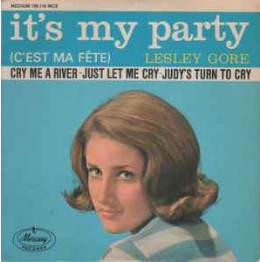
Lesley Gore (right): so much cooler than Billy Joel

I apologize, in advance, for posting something not film-related on Seattle Film Blog, but as an issue of existential concern, I felt compelled to get this off my chest.

On a Slog post last week, Dan Savage revealed his fondness for Billy Joel's "Only the Good Die Young", adding defensively that he didn't care whether Billy Joel is considered to be cool or not. Leaving aside the question of Joel's present coolness, it made me wonder, was Billy Joel cool back in the day? Well, that's a tricky question to answer. What's easier to answer is whether he was popular at my suburban New Jersey high school.

From 1977-1981, I attended Dwight Englewood, a prep school in Englewood, NJ, right across the river from NYC and a hop, skip and a jump from the George Washington Bridge. It was a small school, with about 100 kids per grade [alumni include Tony Bourdain, Mira Sorvino, and Brooke Shields!]. 

Aside from having an arbitrarily shifting dress-code, a crappy football team, and mandatory lunch attendance for all underclassmen, one of our traditions was the senior page. Basically, each senior got a half-page of the yearbook to post a decent-sized photo and a couple of quotes. Most quoted Bartlett's variety Shakespeare, Einstein, Emerson, and Thoreau, plus lots of Tolkien, but many quoted favorite songs. So, by leafing through each senior page, you can get an interesting snapshot of the musical taste of each class. With this in mind, I've compiled a list of each band/artist quoted by each graduating class from 1978-1981, followed by the number of times each was quoted.

As a caveat, I wouldn't call this list wholly representative. Each page quoted the handful of lyrics that seniors found humorous or meaningful, it didn't catalogue every band they liked. For instance, only one student during this period quoted Blondie, but they were popular. Everyone knew them. "One Way or Another" and "Heart of Glass" were heavy-rotation radio hits. You couldn't not hear them.

However, certain acts got quoted on a regular basis and, by looking at the heavy-hitters, one can get a good sense of what was "in." Therefore it's apparent that, in 1979 and 1980, Billy Joel was among the most quoted, an honor shared with the Rolling Stones, Bruce Springsteen, the Grateful Dead, Pink Floyd, and the Beatles. So, yes, in the wake of The Stranger, his first commercially and critically successful album, he was popular, but was he cool?

Well, like Blondie, you couldn't not hear him. Aside from "Movin' Out" and the title track, I never liked or bought The Stranger [or any of his records, for that matter], but was conversant with practically every song on the album, due to repeated radio exposure [plus my sister had the cassette, which she would play in her car]. So, everyone knew the songs and a few people really did dig him, but he was more like a part of the regional ambience than an artist one truly embraced. 

As a suburban Jewish kid, who grew up on Long Island, Joel's bridge and tunnel vision of New York was not unlike our own. His "New York State of Mind" was a TV-friendly version of the city, more Taxi than Taxi Driver, but then, Taxi was a pretty representative portrait in its own right. 

I'm sure Joel was popular with lots of people in the city as well [somebody was buying all those records], but to me he'll always be a part of the suburban soundtrack; an organic part of the landscape, like toll booths, Carvel ice cream, and the Jersey Devil. Asking if Billy Joel was cool, then, is like asking if the New Jersey Turnpike or the Lincoln Tunnel was cool [actually, make that the Holland Tunnel, the Lincoln Tunnel was cool]. He wasn't cool, he wasn't un-cool, he just was.

Somebody who was cool, was Bruce Springsteen. I never dug him, but I understood why many of my classmates did. It's easy to see why. Like Joel he was part of the landscape, but in a way that seemed a million times more authentic. Now, one can have a huge argument over that, but what's inarguable is that Springsteen was from New Jersey and repeatedly referenced things in his songs about New Jersey, and gave a pretty good portrait of youthful yearning in New Jersey. So, maybe one can see why "Born to Run" struck a deeper chord than "Only the Good Die Young."

As Springsteen noted in his induction speech for Roy Orbison at the Rock & Roll Hall of Fame, Orbison was one of those guys you felt most compelled to listen to in your bedroom at night. The same could easily be said of Springsteen. Listening to Springsteen, while lying in bed, you wanted to be him. Listening to Joel while driving on the Palisades Interstate Parkway, you were him. Springsteen represented your inchoate, teenage aspirations. Joel also represented your aspirations, if your aspirations were orchestra seats to Pippin and dinner at Mama Leone's.

Of more personal interest to me, than Joel or Springsteen, are the artists from that era, who are now universally thought to be cool, but weren't particularly popular back then. Despite being a few miles from downtown New York, most of my classmates never bothered to see the Ramones, let alone the Talking Heads, Television or Patti Smith, who was better known as the source of Gilda Radner's punk parody, Candy Slice, than as an actual artist. Needless to say, none of my classmates were fans of the Dictators, the Dead Boys, Suicide, the Contortions, or Teenage Jesus & the Jerks. 

Left: Gilda Radner as Candy Slice

However, I did have classmates, who not only liked the Ramones and the Talking Heads, but also the Dead Boys and the Plasmatics [okay, they liked them in a jokey/ironic way, but still, they were aware of Stiv Bators and Wendy O. Williams!]. They were also conversant with the CBGB/Mudd Club/Danceteria scene, even if they were a little too young to get in to any of those clubs [the legal drinking age back then was 18].

So, the kids at my school certainly preferred the big 70's acts but, interestingly, seemed to have liked them without any gender bias. Girls were as likely to quote Pink Floyd, Jethro Tull, and Yes as boys and boys were as likely to quote Carole King, Joni Mitchell, and James Taylor.

On a final note, I'd like to say that we at Dwight had our own pop royalty, the great girl-group artist Lesley Gore, class of '64, who recorded "It's My Party" while a student. Not only did she record a slew of great songs like "It's My Party," "Judy's Turn To Cry," and "Sunshine, Lollipops and Rainbows" [which always makes me smile when I hear it], but she's also a Jew and a lesbian. Now that, I think, rates a few clicks on the hip-o-meter.

1978
Cat Stevens 9
Beatles 4
Bob Dylan 4
Grateful Dead 3
Jackson Browne 3
James Taylor 3
Paul Simon 3
Steve Miller 3
Billy Joel 2
CSN 2
David Bowie 2
Elton John 2
Joni Mitchell 2
Led Zeppelin 2
Neil Young 2
Pink Floyd 2
Stevie Wonder 2
Yes 2
A Chorus Line 1
America 1
Barbra Streisand 1
Bruce Springsteen 1
Chicago 1
CSNY 1
David Crosby 1
Debby Boone 1
Jethro Tull 1
Jimmy Buffet 1
John Coltrane 1
Loudon Wainwright III 1
Pete Seeger 1
Rolling Stones 1
Seals & Crofts 1
Steely Dan 1
The Carpenters 1
The Who 1
Van Morrison 1
Fleetwod Mac 1


1979
Rolling Stones 6
Billy Joel 5
Bruce Springsteen 5
Grateful Dead 5
Pink Floyd 5
Beatles 4
David Bowie 3
ELP 3
John Lennon 3
Led Zeppelin 3
Carole King 2
Cat Stevens 2
Chicago 2
Dan Fogelberg 2
James Taylor 2
Jethro Tull 2
Joni Mitchell 2
Kansas 2
Lynyrd Skynyrd 2
Yes 2
A Chorus Line 1
Al Jarreau 1
Al Stewart 1
Allman Brothers 1
America 1
Arlo Guthrie 1
Aztec Two Step 1
Barry Manilow 1
Carly Simon 1
CSN 1
CSNY 1
Frank Zappa 1
Gordon Lightfoot 1
Graham Central Station 1
Jackson Browne 1
Janis Joplin 1
Meatloaf 1
Milton Nasicmento 1
Neil Young 1
New Riders of The Purple Sage 1
Paul Simon 1
Ricky Nelson 1
Stanley Clarke 1
The Commodores 1
The Who 1
Warren Zevon 1
George Benson 1


1980
Grateful Dead 13
Neil Young 6
Billy Joel 5
Joni Mitchell 4
Yes 4
Beatles 3
Bruce Springsteen 3
Pink Floyd 3
The Doors 3
Barry Manilow 2
Carole King 2
Chicago 2
CSNY 2
Dan Fogelberg 2
David Bowie 2
Genesis 2
Jefferson Airplane 2
Kenny Loggins 2
Rolling Stones 2
Argent 1
Beach Boys 1
Bob Dylan 1
Bread 1
Cat Stevens 1
Chuck Mangione 1
Devo 1
Donna Summer 1
ELP 1
Fleetwood Mac 1
Frank Zappa 1
George Benson 1
Graham Nash 1
Harry Chapin 1
Jackson Browne 1
Jethro Tull 1
Jim Croce 1
Marshall Tucker 1
Paul McCartney 1
Pippin 1
Rocky Horror Picture Show 1
Led Zeppelin 1


1981
The Beatles 9
Grateful Dead 9
Bruce Springsteen 7
Pink Floyd 6
James Taylor 5
Lynyrd Skynyrd 5
Rolling Stones 5
Yes 5
John Lennon 4
The Who 4
CSN 3
Jim Croce 3
The Doors 3
Barbra Streisand 2
Barry Manilow 2
Billy Joel 2
David Bowie 2
Fame 2
Frank Sinatra 2
Jethro Tull 2
Jimi Hendrix 2
Joe Walsh 2
Led Zeppelin 2
Paul Simon 2
Pippin 2
Queen 2
Rocky Horror Picture Show 2
Rush 2
Allman Brothers 1
Art Garfunkel 1
Blondie 1
Blue Oyster Cult 1
Bob Dylan 1
Boston 1
Brian Eno 1
Cat Stevens 1
CSNY 1
Dan Fogelberg 1
Deep Purple 1
Elton John 1
Elvis Costello 1
Foghat 1
Genesis 1
Gordon Lightfoot 1
Hoyt Axton 1
Isley Brothers 1
Jackson Browne 1
Kenny Loggins 1
Little Feat 1
Molly Hatchet 1
Outlaws 1
Peabo Bryson 1
Ramones 1
Robbie Robertson 1
Rod Stewart 1
Rossington Collins Band 1
Seals & Crofts 1
Simon & Garfunkel 1
Stanley Clarke 1
Stevie Wonder 1
Strawbs 1
Street Scene 1
Styyx 1
Supertramp 1
Nancy Honeytree 1
Carole King 1
Doobie Brothers 1
Capt. Beefheart 1


Images: Discogs (Lesley Gore - "It's My Party" single), PowerPop … An Eclectic Collection of Pop Culture (Blondie - "One Way or Another"), Wikipedia (The Stranger, Some Girls, and Abbey Road), NBC/Getty via Rolling Stone (Gilda Radner), and Amazon (Tea for the Tillerman). 

Now I'm Home (to Stay): Roky Erickson Documentary You're Gonna Miss Me

YOU'RE GONNA MISS ME
(Keven McAlester, US, 2005, 35mm, 92 minutes)


I am not a member of the human race (not an earthling) and am in fact an alien from a planet other than earth.
--Roky's Declaration, June 13, 1975

Before watching You're Gonna Miss Me, I had just finished reading Eye Mind, Paul Drummond's exhaustively researched biography of Roky Erickson and the 13th Floor Elevators. So, I already knew about the psychedelic Texan and his mystical band of miscreants. Not that they're a new interest.

I'm not sure when I first heard the 13th Floor Elevators, but it was probably 20 years ago. Since then, I've been collecting their records (three full-lengths and a mess of bootlegs), following Roky's ups and downs, and writing about his work for a variety of venues.

That makes me an informed fan, though not exactly a scholar. Drummond and Keven McAlester, on the other hand, are experts on Erickson's strange and fascinating career. The book was eight years in the making, while the film took six (both began in 1999). Further, McAlester, a former Texan, is credited as one of the book's researchers, while Drummond, a Brit--like Julian Cope, who penned the foreword--appears in the film.

To be an expert doesn't just necessitate an intimacy with Roky's recordings, but with Texas, hallucinogens, and mental illness. Texas, for instance, helped to make Roky the unique individual that he was--and remains. And in the form of its draconian drug laws, it conspired to destroy him (he did three years in a mental institute for possession). Like the book, the movie recounts Roky's rise, fall, and resurgence.

You may think you've heard this story before--and maybe you have--but that doesn't make it any less compelling. And the parallels with Be Here to Love Me: A Film about Townes Van Zandt and The Devil and Daniel Johnston are hard to deny: the three musicians all hail from the same state, two were subjected to shock treatment (Erickson and Van Zandt), and two were touched by madness (Erickson and Johnston).

And this isn't in the film, but not only did Erickson and Van Zandt co-habitate for a spell in 1968--they even dated the same woman--but Erickson and Johnston used to watch old horror movies together in the mid-1980s, inspiring Johnston's tribute, "I Met Roky Erickson" on the 1989 album with Jad Fair It's Spooky. It should also be noted that Richard Linklater associate Lee Daniel shot both You're Gonna Miss Me and Be Here to Love Me.

That said, McAlester's movie pivots on Roky's guardianship proceedings, and that certainly sets it apart from these other documentaries (the book covers the same territory, but not in as much depth). After making a splash with the Elevators in the 1960s, he pursued a solo career in the 1970s and 1980s, but years of heavy hallucinogenic use-over 300 acid trips-combined with pre-existing psychological problems, led to virtual incapacitation by the 1990s. The trial was arranged to transfer Roky's care from his eccentric mother, Evelyn, who doesn't believe in therapy-she prefers prayer-to Roky's younger brother, Sumner, who does.

Consequently, You're Gonna Miss Me revolves around Evelyn as much as it does Roky (his father, Roger, also puts in a brief appearance). While it's easy to sympathize with the sweet, if addled singer, his mother presents more of a challenge.

There's no doubt that Mrs. Erickson loves her oldest son, but doting on him to the exclusion of his siblings appears to have laid the groundwork for the trouble to come, since Roky never learned how to take care of himself. Instead, he bounced from woman to woman before returning to Evelyn--which seems to be the plan all along. Sumner, a classical musician based in Pennsylvania, turns out to be a bit of an odd duck, too, but one with a firmer grip on reality.

By the end of the documentary, Roky is finally on the road to recovery, though I wish McAlester had been able to film for another year or two (fortunately, the DVD includes a postscript). As the book concludes, Roky has progressed beyond what the director was able to portray on screen.

Since its completion, he's started playing out again. First, a few gigs in Austin, where he returned after a sojourn in Pittsburgh, and now he's hitting locales that were beyond his grasp as a member of the Elevators (International Artists promised, but never provided any tour support).

As a taster for Roky's performance at this year's Bumbershoot, You're Gonna Miss Me gets the job done, even if his inimitable music takes a backseat to his mental state. For more on the former, Eye Mind delivers a greater share of the goods. The two complement each other well.  

Sometimes people write something kind about what we did,
and I think, "Why not the Seeds, why not the 13th Floor Elevators?"

--Iggy Pop on the Stooges

You're Gonna Miss Me opens at the Northwest Film Forum on Fri., 8/24. The NWFF is located at 1515 12th Ave on Capitol Hill. Roky Erickson and the Explosions play the Mural Ampitheater on Mon., 9/3 (followed by fellow Texan Steve Earle). Eye Mind: the Saga of Roky Erickson and the 13th Floor Elevators, the Pioneers of Psychedelic Sound is set to be released in November. Images from Alternative Press, Amazon, and Michael Corcoran's Overserved (Evelyn and Roky 1991. Photo by Martha Grenon). 

Monday, August 20, 2007

John Sayles on John Sayles: Part Six

John Sayles on owning vs. leasing, music rights, and film as an agent of change

***** ***** *****

On owning vs. leasing

We got the rights back to our first three films, which are Secaucus 7, The Brother from Another Planet, and Lianna. We're working on Matewan, but that's a tangled web. The company went out of business, and I think people were told, 'Well, we can't pay you, but we'll give you the rights to this.'

So, it's a big legal magilla, and we don't have much money to pull these things away from litigation or whatever. And something like Baby, It's You, if we can get the rights to a couple other films, what we might try to do is just say to Paramount, 'Will you lease us the right to put this in the package of three films?' Or something like that.

Nobody ever gives up their library anymore if the company is still in business. It's too--it's just not done. They don't want to starve, but they might be able to lease it. But even that--these corporations get more corporate and bigger, and they have more and more titles to deal with. They also start thinning out their staff, so all of a sudden, you have somebody who wasn't born when Baby, It's You was made, and they have a computer, and it has 500 titles on it, and they don't know what any of these movies are. Or if they do, they may not have seen it, and it just has a number next to it, or a 'Do not do this' thing. They don't have a mandate to be creative, so it's something that we bang our heads up against a lot.

[Killer of Sheep image]

On Killer of Sheep
It was a test case. When they used to do seminars for independent filmmakers: This is how not to do it. I think it was only able to play on PBS--and they have a different music licensing agreement than everybody else. Actually, they probably cleared the music rights. So, there are all kinds of movies that have wonderful music in them, and then the distributor finds out--we actually didn't secure the rights to that.

[The lack of music clearances resulted in a release delay of 30 years.]

On music rights
It used to be that you could go to--you know, Stax would have their own publishing and this, that, and the other. By about 1985-1987, those little companies started being bought up by the big companies, so now there's really, at the most, at least a half dozen companies that you have to deal with--VJ and Stax and all these little outfits that have their own publishing companies. And once again, it's just a computer list, and they set the numbers where everybody else sets them. And it's really hard to license music. So, the soundtrack for Baby, It's You, for instance, we'd never be able to get that together again. It would cost more than the movie now. Those are the breaks. I mean, Bruce Springsteen, who we didn't really know at that time, we said, 'Look we put these songs in the movie. Watch the movie.' And we sent a print over. 'If you hate it, we'll take them out.' And they liked the movie, and said, 'Here's what we'll do. We own half the rights, and we'll give half for a dollar or something like that.' We had to pay full price to CBS for the performance, but the publishing we got very cheap, and that's the one reason we were able to put Bruce songs in it. But that doesn't happen very often--as a matter of fact, most artists don't have that kind of control over their publishing. Performances usually belong to the record company. It's a rare artist who can control publishing.

[Sayles has directed three videos for Springsteen, including "Glory Days."]

[Phil Phillips image]

On Phil Phillips
So, when we were making Passion Fish, somebody said, 'See that extra over there. That's Phil Phillips, the guy who recorded 'Sea of Love.' And I think his name was Phillip Baptiste, or one of those Cajun names--his real name--but he recorded under Phil Phillips, and I got talking to him about [it]. 'So, it was great that your song, and they made a movie, and the song is played a dozen times in it,' and he said, 'You know, I didn't make any money on that. I made a couple cents as a performer.' He was one of the writers of the song, but by the time it got on the record label, it was so diluted by other people who had nothing to do with writing his song.

On the Rhythm and Blues Foundation
Ruth Brown started with Bonnie Raitt and a couple of other people this Rhythm and Blues Foundation, and some of them, because of that--people who actually created this music--got rediscovered when there were other media. When CDs came along, they weren't getting any of the money, and so they did some reparations--especially with Atlantic Records. I think they were the first label to say, 'Yeah, you've got a point.' Ahmet Ertegun, he was embarrassable. Some aren't embarrassable.

On film as an agent of change
I think movies are part of the conversation, and it can be a very important conversation. If you think of race relations in the United States, movies until about 1955 were part of the problem. If you watch old movies, racism was underlined and encouraged and reinforced by portrayals of black people, especially in movies. From about 1955 on, they started--very slowly--to be part of the solution. Sometimes--eventually--the most important thing was when it could be just a throwaway, and you had some black soldiers or some black ballplayers, and 'Nobody Knows the Trouble I've Seen' played on the soundtrack. You know, Denzel Washington is one of our big action heroes--we could do a lot worse, because he's a good actor. And he doesn't have to be in a movie that's only about black people.

[My tape ended as Sayles was about to say something about Inside Man.]

Reminder: John Sayles will be at SIFF Cinema on Sat., 9/1, at 12pm as part of Bumbershoot's 1 Reel Film Festival. Afterwards, the Honeydripper All-Stars play the Starbucks Stage at 3:15pm. For more information, please click here. As for the movie, Honeydripper is set to be released in 2008 after its premiere at this year's Toronto International Film Festival. For more on the writer/director, Sayles on Sayles is the title of the interview compendium from which these posts take their name.

***** ***** ***** ***** ***** *****

Images from Senses of Cinema, Google Images, and Wikipedia.