Saturday, October 22, 2022

The Banshees of Inisherin and the Ireland of Martin McDonagh's Feverish Imagination

THE BANSHEES OF INISHERIN 
(Martin McDonagh, 2022, Ireland/UK/USA, rated R, 114 minutes) 

Inisherin is the kind of postcard-pretty Irish town that only really exists in the imagination of filmmakers like Martin McDonagh. It isn't just that his film takes place in a past devoid of radios and TV sets--even electricity--but Inisherin is more of an idea of Ireland than a representation. 

In its hazy beauty, it never looks or feels quite real, though McDonagh, an Englishman of Irish ancestry, filmed on location on the Aran Islands (aided by extensive post-production work to erase all signs of modernization). 

Though I don't believe he was aiming for documentary realism, his take on rural Ireland isn't worlds away from the cozy communities depicted in mainstream features, like Kirk Jones's 1998 codger comedy Waking Ned Devine or John Patrick Shanley's 2020 romantic picaresque Wild Mountain Thyme (from his play Outside Mullingar). I doubt that McDonagh, a playwright who expanded from the stage to the screen with his Oscar-winning 2004 short Six Shooter, would be flattered by those comparisons.

As a filmmaker, his work often feels like a cross between the plays of Samuel Beckett and David Mamet and the films of Quentin Tarantino. 

The 27-minute Six Shooter with Inisherin actor Brendan Gleeson features a reported 34 instances of the word fuck and its variants. That's something the American auteurs behind 1992's Glengarry Glen Ross and Reservoir Dogs could get behind--and probably inspired. (According to Jason Bailey's recent 30th anniversary piece about both films in The New York Times, one features 138 instances of the word and the other features 269.)

The Irish-born Beckett, meanwhile, is famed for work that is stripped to the bone. Plays like Waiting for Godot could be set in Ireland, or anywhere, really. They exist in minimalist spaces of the writer's unique imaginings.

Inisherin, by contrast, can be cartoonish. Other than Kerry Condon's Siobhán, the characters are a pretty simple-minded lot. With few exceptions, they aren't all bad or all good, but they're painted with broad strokes. 

Colin Farrell's Pádraic, a dairy farmer, shares a cottage with Siobhán, his well-read sister. Pádraic considers Siobhán, Colm (Brendan Gleeson), and Jennie, a donkey, his closest companions. There's no mention of parents or partners, love or sex, but Pádraic has everything he needs. Or so he thinks.

That changes when Colm stops talking to him and Siobhán considers leaving for a teaching job. There's also the buzz of war in the distance. Though McDonagh doesn't specify the year or the conflict, characters make vague references to it (it's 1923 and civil war is in full bloom). They know something is going on, but they're more concerned about life on Inisherin, where minor conflicts, like Colm's silent treatment, can seem cataclysmic. 

Though it's tempting to describe the 20-year age gap between Pádraic and Colm as unrealistic, cross-generational friendships aren't completely unheard of. If anything, I wish they were more common, but in an isolated village like Inisherin, Pádraic doesn't have many options (in 2008's In Bruges, the actors' first collaboration with McDonagh, Gleeson played more of a protective mentor figure to Farrell's trigger-happy hitman). 

Though Pádraic has a friendly rapport with the troubled, puppyish Dominic (The Green Knight’s jittery Barry Keoghan), they aren't exactly friends. 
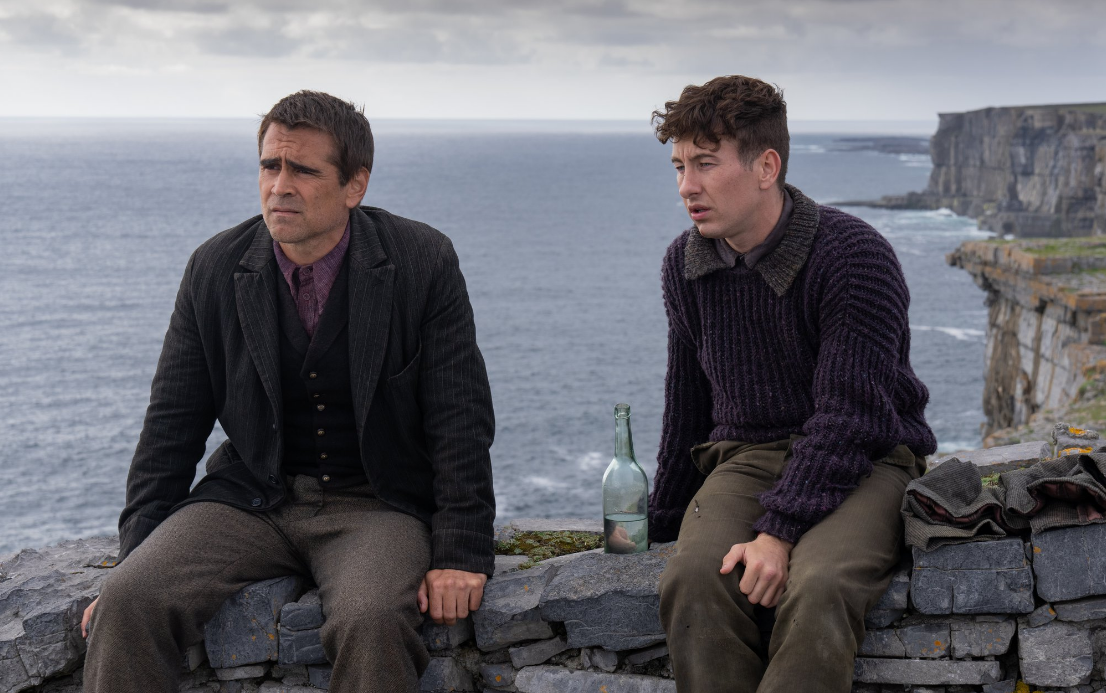
If anything, Colm's age seems a likely factor in his desire to concentrate on his fiddle-playing over his pub sessions with the amiable, if aimless Pádraic. 

In a different kind of movie, Colm's behavior might signify mental illness--not least when he turns to self-mutilation after Pádraic refuses to leave him alone--but McDonagh presents both men as stubborn in the worst of ways. 

The more closed-off Colm becomes, the more aggressive Pádraic becomes in trying to get him to open up. He just wants things to return to the way they were, but once the Spy vs. Spy trajectory is set in motion, it's too late. 

Though described as a black comedy, and studded with some genuinely amusing bits of business, Inisherin's central conflict, a metaphor for the Troubles, plays more like tragedy. The actors are certainly up to the task, though the Venice Film Festival awarded Farrell for his work over Gleeson. 


As in In Bruges, they're pretty evenly matched, though Farrell has more dialogue (he's also admitted that he felt like a pillock during the 14-minute standing ovation at the Venice fest, though Gleeson found it touching). 

Throughout the film, McDonagh fills the screen with uptight priests, beneficent bartenders, batty old ladies who aren't as batty as they seem, pints of lager, pub singalongs, woolly sweaters, battered brogues, and all the usual markers of Irishness--it's only missing a few freckle-faced urchins. It's not that these things don't exist in Ireland, only that he lays it on a bit thick.

As The Irish Times critic Donald Clarke told Indiewire, "There's a certain degree of unease in Ireland about McDonagh's post-modern, heightened versions of Irishness. The films and plays do well here. But there is a tension in Ireland about his treatment of the country." Even from thousands of miles away, here in the States, it's a tension to which I can completely relate. 

But still, the chance to spend time with Colin Farrell and Brendan Gleeson is worth the price of admission alone, and they're both in top form here. 


The Banshees of Inisherin opens in Seattle on Fri, Nov 4, at SIFF Cinema Uptown, among other venues. Images from GeekTyrant (Colin Farrell) and Jonathan Hession/Searchlight Pictures (Farrell and Brendan Gleeson, Farrell and Kerry Condon, Farrell and Barry Keoghan, and Farrell and a horse).  

Friday, October 14, 2022

Claes Bang's Wild Adventure: The Bay of Silence

THE BAY OF SILENCE
(Paula van der Oest, 2020, rated R, 93 minutes)

Depending on your perspective, The Bay of Silence is a domestic drama, a psychological thriller, or a travelogue--possibly all three. 

In the prologue, Will (Danish actor Claes Bang, the BBC's Dracula), a graphic designer, and Rosalind (Ukrainian-French actress Olga Kurylenko, Quantum of Solace), a photographer, wander around the hills of Liguria, Italy. They swim in the titular bay, admire the hillside homes, and make love al fresco. 

It would all seem idyllic if Rosalind, a single mother with two kids, wasn't so skittish about having her picture taken. The minute Will tries to capture the moment, she deletes the photo from his phone. He laughs it off. The audience knows better.

The vacation culminates in a marriage proposal. Eight months later, she's pregnant, and they've moved into a London home with her grade school-age twins and a nanny. The romantic idyll ends when she leans against a wobbly railing and tumbles over the balcony to the cobblestones below. Though their baby suffers no harm and she recovers from her injuries, Rosalind emerges with the conviction that she lost a child in the fall. Will assures her that she wasn't carrying twins for a second time, but she doesn't buy it. 

After Rosalind develops a sleepwalking habit, Will tries to figure out what's really going on. 

Her stepfather, Milton (Succession's 
ever-slippery Brian Cox), a former military intelligence officer, tells him that she's been seeing the same Swiss doctor for years. Since they don't live anywhere near Switzerland, that seems odd. "Skype," Milton explains. 

One day, Will comes home to find the house empty. No wife, no kids, no nanny, no passports. While sorting through the clues, he suspects she's run away with a photographer friend. Knowing that her family has property in Normandy, he goes looking for her in France where he finds a woman, his wife, who has gone off the deep end. He also finds a dead body. 

From Normandy, they travel to Switzerland, where Rosalind’s mother, Vivian (Alice Krige, Institute Benjamenta) tells him a few things about Rosalind's mental state, but it doesn't explain what happened to the nanny, who has disappeared, and why a stranger has been following them around Europe. 

Oscar-nominated Dutch director Paula van der Oest (Zus & Zo), working from Caroline Goodall's adaptation of Lisa St. Aubin de Terán's 1986 novel, eventually solves the mystery, but it's all too neat and tidy (Goodall also plays Will's colleague). If her film isn't quite the disaster its reputation might suggest, it doesn't add up to a whole lot, despite the filmmaker's attempts to grapple with serious issues like mental illness and sexual abuse. 

The actors are fine, though both leads have done better work elsewhere, particularly Claes Bang who made such a vivid impression in Rubin Östlund's Palme d'Or winner The Square--it's also nice to see the undervalued Alice Krige, an intriguing presence in some of the dreamier films of the 1990s, in most anything. But the scenery is certainly nice. A strong optional selection. 

The Bay of Silence is available to stream through the usual digital pay operators. Images from the IMDb (Claes Bang and Olga Kurylenko and Bang and Alice Krige) and The Hollywood Reporter (Bang and Kurylenko).

Thursday, October 13, 2022

On Apocalypse: A Bill Callahan Tour Film

This is a revived version of a Line Out post about Hanly Banks's 2012 documentary Apocalypse: A Bill Callahan Tour Film (these posts were purged from the internet after The Stranger pulled the plug on their music blog).

FILM/TV Sep 5, 2012 at 12:49 pm

Apocalypse: A Bill Callahan Tour Film

Bill Callahan as seen by Hanly Banks 

APOCALYPSE: A  BILL CALLAHAN TOUR FILM
(Hanly Banks, USA, 2012, 60 minutes)

Instead of a conventional documentary, this concert film captures the singer/songwriter on one tour in support of one album, 2011's Apocalypse (I caught his Seattle stop at Neumos with Michael Chapman; it was great).

Of course, there's nothing particularly unusual about a concert film, except Callahan's been around long enough that some fans might welcome the opportunity to get to know him better or to hear a few older songs.

For an artist who wants to showcase their most recent work while maintaining their privacy, however, it's the way to go. As he sings in "America!," one of his finest songs to date, "Everyone's allowed a past they don't care to mention."

Instead, the director combines songs with glimpses of the towns Callahan visited. Filled with twang, reverb, and the seersucker suit-clad subject's unvarnished baritone, Apocalypse offers a noirish take on Americana, like Scott Walker playing with Calexico, and the shots of farms, forests, and factories suit the material.

Nonetheless, the emphasis remains on Callahan and his band (guitarist Matt Kinsey and drummer Neal Morgan), and Hanly Banks neatly stitches together different domestic performances. One minute, Bill is wearing sunglasses, the next he's not. One minute, he's outside under the stars, the next he's not. It isn't as distracting as it sounds, but I'm also pretty accustomed to the technique by this point.

Hanks, a former Fader contributor, has designed the film more for listening to the music and meditating on the imagery than for thinking about Callahan's background and how it relates to his discography. If he talks about writing and touring, he avoids specifics, concluding that he's never more "real" than when he's on stage.

In the end, Apocalypse belongs to the impressionistic, About a Son school of filmmaking, which is both its biggest strength and its biggest weakness. Even the latest John Mellencamp DVD, It's About You, takes this approach; in fact, the two releases are strikingly similar, even if one guy's an FM mainstay and the other's an indie stalwart. If I prefer this film, that's mainly because I prefer Bill Callahan.

Apocalypse opens at the Grand Illusion on Fri, 9/7, at 7:30pm.

Friday, October 7, 2022

Demdike Stare and Jean Rollin's Nude Vampire

This is a revived version of a Line Out post about Demdike Stare's live score for Jean Rollin's La Vampire Nue (these posts were purged from the internet after The Stranger pulled the plug on their music blog).

FILM/TV Sep 26, 2012 at 12:47 pm

Demdike Stare and Director Jean Rollin

If you don't know much about Demdike Stare, who'll be returning to town for Decibel Festival 2012, Dave Segal lays it out for you here.

La Vampire Nue (1970) / Carnal Cinema

Earlier this year, in advance of their triple CD Tryptych, Segal described the British duo (Miles Whittaker of Suum Cuique and Sean Canty of Finders Keepers Records) as "English hauntological-post-techno illuminati," so who better to provide the musical accompaniment for 1970's La Vampire Nue from horror-kink master Jean Rollin? (Demdike made their Seattle debut at May's Psychic Circle Fest.)

Even if Whittaker rejects the term "hauntological," Demdike Stare's music isn't worlds away from the unsettling, cinematic sounds of Julian House's Focus Group or Leyland Kirby's Caretaker (and I couldn't recommend the Focus Group's collaboration with Broadcast, Investigate Witch Cults of the Radio Age, and the Caretaker's An Empty Bliss Beyond This World more highly). Though Kirby was originally scheduled to attend Decibel, as V/Vm, he's no longer part of the bill.

The best known Rollin feature film remains his first, 1968's The Rape of the Vampire.

As for Rollin (1938-2010), the French author, director, and porn auteur worked under his own name, as well as the aliases Michel Gentil, Robert Xavier, and Michel Gand. His specialties included vampires and naked ladies. Best title: Vicious Penetrations (four of his X-rated films feature the word "penetration" in the title).

Just as Whittaker rejects a term frequently associated with his work, Rollin rejected the term "horror," possibly because he wasn't as interested in scaring audiences as in seducing them by any means necessary (lesbian vampires were a particular favorite). He also rejected comparisons to equally prolific Spanish filmmaker Jess Franco, though they sometimes worked on the same projects.

Redemption-Kino Lorber / La Vampire Nue

Here's Rollin's own description of La Vampire Nue (The Nude Vampire):

By the time my second film rolled around I was a little wiser. I again succeeded in including certain images that were important to me: the men with animal heads; the curious drawing room-library I had rented on the Cours Perimony check, where I had a harp brought in. And a fantastic labyrinthine castle, where the naked vampire with orange veils, a candelabra in one hand, wandered.

I'm not familiar with the film, but I'm definitely curious. An IMDb user proclaims it "possibly the weirdest" of the eight Rollin pictures he's seen. Good or bad, it's sure to be...provocative, and I'm sure Whittaker and Canty have conjured up a suitably atmospheric score to accompany it. At the very least, Rollin didn't consider Nue the worst of his 42 (or so) films—that honor went to 1980's Zombie Lake.


Rollin prioritized the production of imagery over the direction of actors.

Demdike Stare re-score La Vampire Nue at Broadway Performance Hall today at 5:30pm. More info here. On Sept 27, they'll be part of the Modern Love Showcase with Andy Stott and Cut Hands at Melrose Market Studios. 

Stephen Kijak Profiles Unstoppable Japanese Metal Musician Yoshiki Hayashi in We Are X

This review originally appeared in Bob Ham's Portland film screenings newsletter Daily Projections on November 21, 2016.

WE ARE X 
(Stephen Kijak, 2016, USA/Japan, 101 minutes)

Over the years, a few Japanese acts have found some degree of American success, from Boris to Peelander-Z. Until recently, however, X Japan were their country's best kept secret. Now they're playing major US venues, but they're still hardly a household name. Stephen Kijak (Scott Walker: 30 Century Man) uses their 2014 concert at Madison Square Garden as a structuring device for a look back at their rollercoaster career. 

With their glam-punk "visual kei" image and thunderous metal sound, it's hard to understand why they didn't cross over sooner. Gene Simmons, a native Hebrew speaker, blames it on a reluctance to sing in English. 

In their early days, they looked and sounded like a symphonic speed-metal cross between Hanoi Rocks and Metallica. Kijak tracks their rise to fame along with the Badfinger-sized setbacks that befell them in the process. 


He concentrates primarily on soft-spoken band leader Yoshiki Hayashi. The drummer, composer, and producer grew up as a sickly child, but he excelled as a classical pianist. Losing his musically-inclined father to suicide when he was 10 years old, however, made him angry and suicidal until his mother bought him a drum kit on which to bash out his frustrations. 

Yoshiki formed X in his teens, signed to CBS/Sony at 20, and then pulled the plug in 1997 after singer Toshimitsu Deyama, aka Toshi, a friend since preschool, left to join the Home of Heart cult. Things would get worse in the years to come, so much so that fans rioted in the streets in response to the more tragic developments. Several even attempted suicide (three died). 

If the band's reformation has allowed them to finish what they started, Yoshiki, who performs in a neck brace due to excessive head-banging, admits that he's in constant pain from tendonitis, carpal tunnel syndrome, hyperthyroidism, and other ailments. During the course of the film, he visits a specialist and receives a series of pain-relieving injections. 

As in his Scott Walker documentary, Kijak offers no details about Yoshiki's sexual orientation or romantic history, which plays more like a decision than an oversight. If he recounted Jaco Pastorius's relationships in the very fine Jaco, co-directed with Paul Marchand, that may be because he didn't need the bassist's permission to make a film about him (authorized biographies of living figures often come with strings attached). Whether the androgynous Yoshiki is attached or otherwise, Kijak gives the impression that music takes up so much of his time that there's little room for a partner of any kind.

If Kijak's documentary hits a few familiar beats along the way, it's hard not to be moved by emotional footage of fans across the world finding solace and support in the absolutely unstoppable Yoshiki's life's work.


We Are X, a Drafthouse Films release, is available to stream through Google Play, YouTube, and other digital pay operators. Images from Drafthouse / The New York Times (Yoshiki Hayashi), RogerEbert.com, and Vudu.

Simon Amstell Charms with Semiautobiographical Love Story Benjamin

BENJAMIN 
(Simon Amstell, 2020, UK, 85 minutes) 

Loose and charming, standup comic-turned-director Simon Amstell's second film, after 2017 mockumentary Carnage, revolves around a character much like himself, a gay London director making a film about a gay London director (Amstell also served as host of BBC quiz show Never Mind the Buzzcocks). 

Though Benjamin's first film met with a positive response, he's been struggling with his second. Instead of another romantic comedy, he's decided to make something more ruminative. 

In the midst of the struggle, his exasperated publicist, Billie (Jessica Raine, Call the Midwife), offers a diversion by inviting him to a launch party for a chair. The minute he catches a glimpse of Noah (Phénix Brossard, Little Joe), French singer of the band hired for the event, he finds himself smitten.

Their first meeting is awkward as Benjamin (Irish actor Colin Morgan, Merlin) says whatever pops into his head, but the easygoing Noah doesn't seem to mind. When he asks what Benjamin has been working on, the director describes his latest project as a film about his "inability to love"--an autobiographical feature, in other words. 

Noah invites himself to Benjamin's oddly-shaped apartment, ostensibly to watch his first film, but a romance soon ensues (the apartment includes a fluffy tabby who appears to talk to Benjamin when he's at his lowest ebb). The next day, they eat porridge and trip on magic mushrooms. 

At the premiere of Benjamin's new film, the audience reaction is less than enthusiastic. He's crestfallen, if unsurprised. Noah, who is preparing to graduate from music school, says he likes it, but he chooses that particular moment to let Benjamin know that he isn't ready for a relationship. 

Casting about for a new project, Benjamin agrees to work on a script with Harry Barridge (Jack Rowan), the handsome, if vapid star of his film, but nothing productive comes from it. 

His love life, however, improves when he and Noah agree to try again, but after a disastrous dinner with Noah's parents when he runs into caustic old flame Paul (Nathan Stewart-Jarrett), the relationship founders again. Benjamin also worries about his friend, Stephen (Joel Fry, Game of Thrones), a standup who spirals into depression after a cringe-inducing gig. 

Amstell's film, which feels like the setup for a sequel, ends before Benjamin has decided on his next career move, but his personal life finally appears to be coming together. At its worst, the director's sophomore effort feels slight, but the laughs flow easily though deft dialogue and Morgan's crack timing, and Amstell dodges most of the clichés associated with the gay rom-com, like over-the-top gal pals and cartoonishly clueless parents. I enjoyed it.


Benjamin is available through Kino Lorber and free streaming through Plex and Tubi. Images from Channel 4 (Colin Morgan and Phénix Brossard), Film Cred (Jessica Raine, Morgan, Joel Fry), and Zeke Film (Morgan and cat).  

Saturday, October 1, 2022

Watch List: A Wrenching Indictment of Philippine President Duterte's Drug War

WATCH LIST
(Ben Rekhi, 2019, Philippines, in Tagalog w/ English subtitles, 94 minutes)

Filmmaker Ben Rekhi offers a wrenching indictment of the devastation President Rodrigo Duterte's drug war has wrought on the people of the Philippines. 

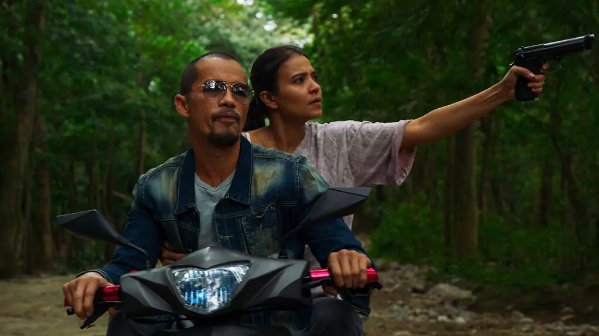
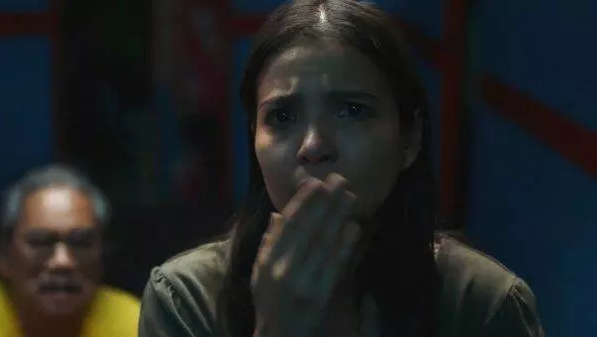
The story begins when cops round up dozens of suspected drug dealers in a Manila district, including Maria (Alessandra De Rossi) and Turo Ramon (Jess Mendoza). They're recovering drug addicts, and he's an ex-con, but they went straight once their kids came along. The cops take mug shots, collect urine samples, and enroll them in a mandatory rehabilitation program. 

The next day, Turo is killed on his way to work. Cops insist they weren't responsible, that there's no surveillance footage, and that Turo had meth in his pocket. Maria doesn't believe it. A cop named Ventura (Jake Macapagal) assures her they're trying to solve the case, but she's skeptical about that, too. Turo's death leaves her to fend for their three kids on her own, including 13-year-old Mark (Micko Laurente). 

From neighbor Hector (Lou Veloso), Maria learns that there's no way to get off the drug watch list. Once the state brands a citizen a dealer, they'll always be seen as a dealer. With no income coming in, she downsizes to a smaller shack, and tries to find a job, but no one wants to hire a dealer's widow. 

Out of desperation, she offers to work for Ventura. It's a risky proposition when the police force is rife with corruption. Ventura teams her with a mysterious figure named Torres (Manu Respall), tasking them to catch dealers in the act by pretending to be users or, in one particularly harrowing instance, a sex worker. It doesn't take Maria long to piece together what happened to Turo now that she's just like the people who killed him. 

While she struggles with her conscience, Mark starts hanging out with a friend, Joel (Timothy Malabot), who has become a dealer. A bright, observant boy, Mark tries to stay on the right side of the law, but the pull is strong. He also starts to figure out that his mother has gotten mixed up in something bad, but he isn't certain what it is. 

The conclusion leaves the tiniest glimmer of hope that things might get better someday, but it won't be anytime soon as this system, which is presumably designed to eliminate drug abuse, more effectively encourages it. 

The entire cast is strong, but De Rossi stands out as a woman who becomes everything she hates to provide for the people she loves. Rekhi, an American filmmaker, is aided immeasurably by cinematographer Daniella Nowitz's vivid camerawork. Not an easy watch, though consistently compelling, Watch List is one of the best anti-drug war films I've ever seen.


Watch List is available via Tubi. Images from The Manila Times (De Rossi), The New York Times (De Rossi and Respall), and Flickering Myth.