Friday, January 19, 2007

Béla Tarr vs Ray Dennis Steckler

The Northwest Film Forum recently screened a trio of Tarr, Damnation, Sátántangó, and Werckmeister Harmonies, which seems to be making the art house circuit. In a piece written for the screenings at the Harvard Film Archive Michael Atkinson wrote:

"To label Tarr... as a downer is merely a philistine's impatient way of saying he's an existentialist, a modern-film Dostoyevsky-Beckett with a distinctly Hungarian taste for suicidal depression, morose self-amusement, and bile."

The last portion caught my eye. Is this true, the distinctly Hungarian taste for suicidal depression, morose self-amusement, and bile?

Well, my grandfather Lajos did commit suicide or, to be more precise, died of a morphine overdose which some thought to be intentional. His wasn't the only family death during that period. A few years later, a great number of my relatives expired. For the most part, however, they were snuffed out by the Nazis. Most of them would have preferred the morphine.

My cousin Laci managed to survive the war as a hardcore Communist. While out cheering the occupying Soviet troops, he was swept away to a Siberian gulag. When they discovered he was an electrical engineer who had done pioneering work on the transistor, they made him a proposal; help us and we won't torture you. It was an offer he couldn't resist and remarkably, several years later, they let him go. He settled in Sweden where he lived to a ripe old age and became an avid Reagan supporter.

My grandmother Roszi and my mother, M/*rta, both escaped the war. My grandmother was as witty as Margaret Dumont, but was an excellent baker and could make exquisitely flaky pastries that no one else in the family can seem to replicate. My mother is the funny one (no doubt due to the fact that she learned English from Carl Reiner). She told me this story recently. A couple of Germans were in Budapest, a decade or two after the war, and went to a Cabaret. They remarked to a man nearby that the entertainers in Hungary used to be much funnier, much sharper and more satirical than even the comics in Berlin. What had happened to all those comedians? The man looked at them and replied, "You killed them all."

So, suicidal depression, morose self-amusement, and bile. There might be something to that, but I prefer to think of the other qualities of my relatives.

My cousin Endre, for instance, who raised horses for the Hungarian army. A more dashing man you couldn't meet.

Or my cousin Gabrielle, who was more gorgeous than Pola Negri.

Or the gallantry of my cousin Andre, better known as Robert, who was not only one of the greatest war photographers, but enjoyed an affair with Marlene Dietrich.

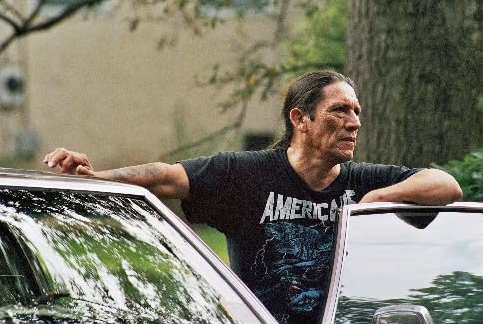
But enough about my family. I enjoyed the Tarr films I caught at the NWFF and while watching one of those very extended shots of people walking, in what feels like real time, my mind drifted to a scene from The Incredibly Strange Creatures Who Stopped Living and Became Mixed-Up Zombies!!? I know. I should be brained with a film can for even daring to think of Ray Dennis Steckler while watching Bela Tarr. Regardless, I dimly recalled a shot of Steckler walking the entire length of Bunker Hill alongside the Angel's Flight funicular. I then recalled a similar scene in Rat Pfink a Boo Boo, where Steckler [or maybe it was Titus Moody] walks to the grocery store to buy a quart of milk; the most notable part of that sequence being the moment where the camera actually waits outside the store for the actual period of time it takes for Steckler [or Moody] to purchase the milk.

The same techniques, but such dissimilar results. What is it that makes one filmmaker a brilliant genius and another a brilliant moron? Perhaps the sum is greater than the parts or, as David Lynch might say, "When you make a peanut butter and jelly sandwich you take some bread and some peanut butter and some jelly. And you put the peanut butter on one side and you put the jelly on the other. And then you put the two pieces of bread together and make the sandwich. Now, the bread and the peanut butter and the jelly are all pretty good, each in their own way, but when you put them together, they're really tasty."

Images from Walker Art Center (Béla Tarr) and Severin Films (Ray Dennis Steckler, billed as "Cash Flagg" in 1964's The Thrill Killers).  

Wednesday, January 10, 2007

Happy Family: 51 Birch Street

Mike and Mina Block in 1965
51 BIRCH STREET
(Doug Block, USA, 2005, BetaSP, 88 mins.)


All happy families resemble one another,
but each unhappy family is unhappy in its own way.

-- Leo Tolstoy

***** ***** *****

To the cynic, documentaries should only be made about special people, i.e. the famous and should-be-famous. To the humanist, all people are special. Yet the world is overpopulated by dull docs, because not all directors ask the best questions, get out of the way when necessary, etc. As a viewer, I fall into the latter (humanist) category. While some subjects may be inherently fascinating, an inept filmmaker can render anything boring. A talented one, on the other hand, can make a great film about anything if they go about it the right way.

Of course, I'm not suggesting there's only one way to approach a subject. All the ways haven't been invented yet. One form that is gaining in popularity is the first-person documentary. I give much of the credit--or blame, if you dislike the genre--to Ross McElwee (Sherman's March), whose films are all grounded in autobiography. Plus, he always narrates and injects himself in the action. He's friendly and forthcoming, so I find him to be a genial guide into the subjects he explores. On the basis of 51 Birch Street, I feel the same about Doug Block.

[image]
Doug and Mina Block

Block set out to make a film about his parents, Mike and Mina, and their 54-year marriage. I don't think they were all that thrilled with the idea, but they gave their consent. Block begins by talking to both of them. His mother takes to his digital camcorder like a fish to water. I found her instantly engaging. Block admits he was never very close to his dad. Not too surprisingly, Mike is pretty tight-lipped in those initial interviews. Then, out of the blue, Mina contracts pneumonia and dies.
Block is devastated. There's a gaping hole in his life. Briefly, there's a gaping hole in the film. Without her involvement, how is he going to complete this project? Should he even try? Well, aside from the letters, home movies, and snapshots (his father was an amateur photographer), it turns out that Mina kept a journal--actually, she kept what looks like dozens, possibly hundreds of journals. Block forges ahead. Over the course of the film, he finds that Mina and Mike's marriage--and by extension his entire childhood--was a lie. A benevolent lie, perhaps, but a lie, nonetheless.
The first clue comes when Block asks his father, point blank, if he misses Mina. Mike says no, he doesn't. Not at all. Their marriage may not have been a happy one, but Mike's candor still comes as a shock to his son. Even more shocking is when the 83-year-old gets hitched only three months after his wife's death--to his former secretary, Kitty. Block starts to wonder if his dad was fooling around with her during his marriage to Mina. Mike denies any infidelity, but the doubts linger.

[image]
Doug and Mike Block--then

Block is pleased his father is moving on, but he's also conflicted. Unlike Mike, he and his sisters, Ellen and Karen, miss their mother. The sudden remarriage to a past associate seems disrespectful to her memory. But there's more to it than that. Around Kitty, Mike starts to become less guarded and more affectionate. Consequently, as Block continues to interview him, the man opens up more.
It's got to be a discomforting experience for anyone who loves a parent, i.e. to see their death free the other to become the kind of person their children could only dream about. And now they're fully grown. Yet it isn't Mina's fault that Mike wasn't happy. As her journals reveal, she was unhappy, too. She kept it from the kids, but after years of psychotherapy, concludes that she was born at the wrong time. She never had the opportunity to pursue her interests. She had three kids in quick succession and Mike was always at work. Someone had to stay home to raise them.
There are more revelations to come, but that's the gist of the film. Although I wasn't reminded of my own parents, I was reminded of my paternal grandparents. When my parents realized their marriage was untenable, they divorced. This was a different era, the late-1960s. The Catholicism of their respective families might have complicated matters, except my parents weren't devout. My grandfather is another story. He was married to my grandmother until she died--of pneumonia. And he didn't sit around mourning either. Just as Block's father trades Long Island for Florida, my grandfather exchanged Hartford for Dublin and married his childhood sweetheart, who had been waiting for him since the 1920s. They had a few good years, but they were elderly and frail. First she died, then he followed suit.

[image]
The whole Block gang

I would like to believe that my father's parents loved each other, but I doubt it. My grandfather was a fugitive from Ireland when he married his first wife, shortly after his arrival at Ellis Island in 1930. Instant green card. My point in bringing this up: Block's story may seem specific, but like the best autobiographical stories, it has surprising resonance. Anyone can feel a connection to it, even if they weren't born to a middle-class Jewish family in 1950s Long Island. An unhappy marriage is a universal thing. We all know one or have even been part of one. Fortunately, this is not a depressing movie. Mike Block couldn't be happier with his new life.
To return to my point about first-person documentaries, I believe it's the only form Block could've used to tell this particular tale. On occasion, he includes outside voices (a family friend, an author), but for the most part, 51 Birch Street is his perspective on his parents. Had someone else made the film, it might look completely different, but he's remarkably even-handed. Block admits his biases up front, yet he's still fair to both parents. On the surface, my grandfather's story may seem more exciting, but I'm not a filmmaker. I couldn't have done what Block has done here. Recommended to anyone who's ever had a family--happy or otherwise.

[image]
Doug and Mike Block--now

We're a happy family
Me mom and daddy.

-- The Ramones

***** ***** *****

51 Birch Street plays the Northwest Film Forum Jan. 12-18, Fri.-Thurs., at 7 and 9pm. The NWFF is located at 1515 12th Ave. For more information, please click here. You can also call 206-329-2629 for general info and 206-267-5380 for show times.

Monday, January 1, 2007

One (or More) That Got Away: Sherrybaby

SHERRYBABY
(Laura Collyer, USA, rated R, 96 minutes)


Right: Sherry in her favorite halter

"Two thumbs up."
--Ebert & Roeper

"Grade A! A miracle of an actress!"
--Owen Gleiberman, Entertainment Weekly

"She's on a fast track to an Oscar nomination!"
--Peter Travers, Rolling Stone

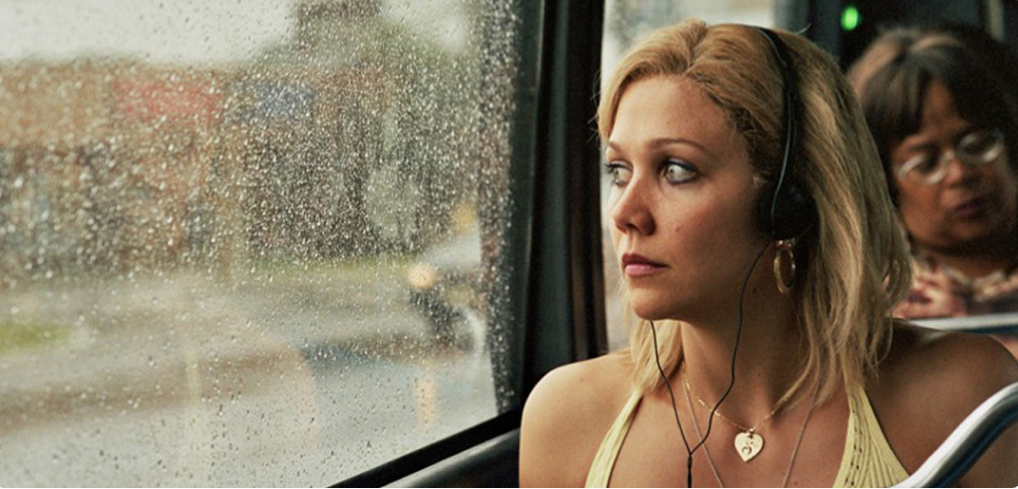
That's a small sampling of the raves plastered across the DVD case--granted, Gleiberman is spelled Gleiverman, but you get the point. Maggie Gyllenhaal already proved she could carry a film with 2002's Secretary, so why didn't Sherrybaby open in Seattle in 2006? Is it because the feature doesn't measure up, despite the quality of Gyllenhaal's performance? Or is it something else? After all, the trailer ends with those familiar words: "Coming soon to theaters everywhere." Yeah, right. Sundance Grand Jury Prize nomination aside, it opened on five screens in the United States.

A friend sent me an advance copy to elicit my opinion. Curious anyway, I was happy to oblige. First of all, I caught three of the motion pictures Gyllenhaal made last year, Monster House (voice only), Trust the Man, and Stranger Than Fiction (I missed World Trade Center). Trust is weak, but Gyllenhaal does what she can with an underwritten role, while Fiction is quite enjoyable, and Gyllenhaal's outspoken baker is one of the highlights--more so, for my money, than an uncharacteristically restrained Will Ferrell. Regardless as to the vehicle, Gyllenhaal hasn't let me down yet.

Left: From the team who brought you Fur...

So, what about Sherrybaby? Did it deserve a wider release? And is Gyllenhaal's Golden Globe-nominated turn truly "Oscar worthy"? At the very least, I haven't seen her play this character before. Sherry is a bottle blonde former drug addict with a penchant for revealing outfits--foundation garments are her bête noir. Upon her release from prison, she moves into a Newark halfway house and reports to Parole Officer Hernandez (Giancarlo Esposito). He requests that she find a job and allows her to see her five-year-old daughter, Lexi (Ryan Simpkins). Her brother, Bobby (Brad William Henke), and sister-in-law, Lynette (Bridget Barkan), have custody of the girl.

Sherry lost touch with Lexi's father ages ago. In the interim, Bobby and Lynette have come to think of the child as their own. As with Olivier Assayas's 2005's Clean, a superior effort, the rest of the film revolves around the ex-con's shambling attempts to get her life in order, so as to become a full-time mother again. She starts by using sex to get what she wants. It's pretty clear she's operated like that since adolescence. 

So, the second question is this: How long will Sherry continue to debase herself? And why does she do it anyway? After all, her brother--house in the suburbs plus pool--turned out all right. Once her father, played by Sam Bottoms, enters the scene, the answer to that question comes into focus.

Of course, there would be no movie if Sherry didn't start to fuck up shortly after re-entering straight society. Her brother, parole officer, and recovery meeting boyfriend, Dean (Danny Trejo), do what they can to help, but it's really up to Sherry, and she's her own worst enemy. Thanks to a sexual favor, however, she does manage to get a coveted job working with children in a development that recalls Half Nelson. A few wrong turns later and the film is over. Sherrybaby is even more inconclusive than Clean, though optimists are likely to find the ending more hopeful than not.

Right: Robert Rodriguez regular Danny Trejo

For the most part, Sherrybaby is Gyllenhaal's show, but that doesn't mean the other actors fail to register. As usual, Esposito is great and the rugged Trejo, an even more unlikely foil than funnyman Ferrell, proves a sympathetic co-star. As for Gyllenhaal, she's very good--and often very nude--and the film isn't bad, but it felt pretty familiar, even as I sensed a first-time director striving for specificity.

I think there's a simple reason why Sherrybaby failed to secure wider distribution. As Variety's Dennis Harvey puts it, "This unadorned, largely downbeat tale is the kind of starkly realistic, small-scale drama that's always a difficult theatrical sell." Of course, Candy, another indie about addiction, made it to Seattle in 2006--all the way from Australia--but then it followed in the wake of Heath Ledger's highly touted turn in Brokeback Mountain

Clearly, Gyllenhaal isn't considered as much of a box office draw. And maybe she isn't, which is unfortunate. Either way, she's sure to have a long career ahead of her, so one poorly distributed feature shouldn't be considered a tragedy, and Sherrybaby probably wouldn't have set the box office on fire.

But it still seems unfair that it didn't even get the chance to try.

Left: Happy Endings - another 
great Gyllenhaal performance

Sherrybaby comes out on DVD on Jan 23, and I feel the same way about Mike Judge's dystopian satire Idiocracy and Goran Dukic's black comedy Wristcutters: A Love Story, which played at last year's SIFF. 

Both films have their faults, but they deserve better than they've gotten. Judge's live-action follow-up to Office Space hits stores on Jan 9. Featuring a rare appearance from Tom Waits, Wristcutters is still seeking theatrical distribution. Here's hoping it has better luck than Sherrybaby and Idiocracy

Images from Directed by Women (Sherrybaby), Disobedient Sounds (Secretary), and the IMDb (Danny Trejo and Happy Endings poster).

Saturday, December 30, 2006

Gone Daddy: The Treasures of Long Gone John

THE TREASURES OF LONG GONE JOHN
(Greg Gibbs, USA, 2006, DV-CAM, 95 mins.)


Todd Schorr poster art

***** ***** *****

We almost really care.
--old Sympathy for the Record Industry motto

18 years of performance anxiety, instability, and poor judgement [sic].
--new Sympathy for the Record Industry motto

It's hard to be objective when a film features all my favorite stuff. I majored in studio art, I've been writing about music for 20+ years (boy, do I feel old), and cats have been a part of my life since day one. That's right, The Treasures of Long Gone John involves art, music, and cats. Mostly, it involves Long Gone John, founder of inimitable indie label Sympathy for the Record Industry.

Born John Edward Mermis in 1951, Long Gone John is also an art collector and feline fancier. And he isn't just any collector, but the rabid, obsessed kind. He's as single-minded as the movie loonies in Cinemania (2002) or crossword crazies in Wordplay (2006). Fans of those films will probably like, or at least appreciate The Treasures of Long Gone John, even if they don't share his interests. Further, director Greg Gibbs' freewheeling approach to fringe culture creates a link with previous art documentaries, like Crumb (1994), In the Realms of the Unreal (2004), and Tales of the Rat Fink (Gibbs uses time-lapse photography to bring artworks to life).

The Sympathetic Nerve Center

To be clear, Long Gone John isn't an artist. He's just a guy who grew up in Southern California in the 1960s and '70s, meaning he was there for the advent of So-Cal punk. Suffice to say, he loved it, and it changed his life. His childhood was crap, and punk gave him something to believe in. He attended all the shows--the Screamers, the Weirdos, the Germs, etc.--and became, like many, a fanzine writer. Instead of picking up a guitar, however, he released bootlegs.

This led to the production of band-sanctioned recordings, and in 1988, Sympathy for the Record Industry was born. Independent labels may be a dime a dozen, but Sympathy was different. Long Gone John sealed his deals with a handshake and let artists retain the rights to their masters. It isn't a great way to get rich. But then, it was never just about the music or the money. Sympathy's sole employee also has a keen eye for visuals and called on promising painters and illustrators to design the cover images, the inserts--the vinyl itself. He paid them next to nothing and kept the originals.

So, you could say the musicians ripped him off, while he ripped off the artists. (When the White Stripes left for V2, they took their masters with them). It's not that simple. Pretty much every outsider artist you could name--Savage Pencil, Coop, Frank Kozik, Mark Ryden, Camille Rose Garcia, etc.--is in the film, and they have nothing but nice things to say about Long Gone John. No, he didn't pay much, but he gave them a start. People bought the records, then they bought the art. And those people include the man himself, who started collecting and commissioning their work for his Spanish-style abode, which he refers to as a museum--as well he should.

In the film, he shares his entire collection, which doesn't just include paintings and drawings, but toys (Hitler in a nighty!), celebrity prescription bottles (Debbie Harry's Prozac!), strange artifacts (a doll tricked out like a mummified baby!), over 10,000 LPs, and about half a dozen cats...

Mark Ryden - The Ecstasy of Cecilia (1998)

Why does he do it? He admits he doesn't know, but suggests it has something to do with growing up underprivileged. In fact, he's a little concerned about this ceaseless urge to acquire, but not so much that he intends to do anything about it.

Towards the end of the film, Long Gone John mentions that he plans to move to Seattle.* The anti-mogul/art collector/crazy cat man, is now one of us (cue "Pinhead"). Why he chose Washington, I couldn't say. Except for his comments in the documentary, he's never been known for his love of interviews (and doesn't own an answering machine or cell phone), so I have no idea whether he'll ever reveal the reason. I just know that the chances of running into him at Roq La Rue or the Fantagraphics store aren't bad.

The Treasures of Long Gone John is so stuffed with, well, stuff, that it may overwhelm some viewers, but I just can't get enough of this kind of thing--and that includes the garage-oriented tunes by Sympathy acts, like Holly Golightly and Sonic Boom--so I was in my element. As I cautioned at the outset, I can't be completely objective, so your mileage may vary. 

While I'm at it, I should note that the term "lowbrow art" gets tossed around a few times. Every artist agrees: it sucks. My use of the words "outsider" and "alternative" is, perhaps, similarly insufficient. Most of the featured artists make a living at what they do, but they haven't come to a consensus on the best way to describe it. Gary Baseman, for instance, laments that his attempts to popularize "pervasive art" have come to nought. Call it what you will--there's a lot of it in the film. Plus music. And cats.

* On screen, he mentions Seattle, but the official website notes that Olympia is the new home of the Sympathetic Nerve Center.

The production team...has just learned some unfortunate news that we deeply regret reporting to our extended family. Last week, our favorite feline and a true star of the film--Go the Cat, left the physical world. Those that have viewed the film never forget the lasting impression Go leaves. In every city, at almost every screening... Go elicits howls and hoots that represent the peak of reactions. Go will truly be missed by us all and will live on forever in his silver screen debut.
-- From The Treasures of Long Gone John website

***** ***** ***** ***** ***** ***** ***** ***** *****
The Treasures of Long Gone John plays Northwest Film Forum Jan 5-7. The NWFF is located at 1515 12th Ave between Pike and Pine. For more information, please click here. You can also call 206-329-2629 for general info and 206-267-5380 for show times. Images from WikiArt and Vice.  

Thursday, December 28, 2006

What I Liked in 2006

This might be due to the lingering effects of the high-quality hash that was readily available in NY in the 80's, but I can't remember all the films I saw this year. Perhaps next year I'll keep a log. In any case, of the films I can remember here's my top twenty faves in alphabetical order.

1. Apocalypto
My ultra-Zionist friend, Mike, was appalled that I paid to see this, but as Tony Bourdain said, "I'm no fan of Donald Rumsfeld, but if he makes a good sandwich, I'll certainly eat it." As history it was rubbish, but as entertainment it was worth $10 of my Jew dollars.

2. Casino Royale
Daniel Craig isn't just the shortest actor to play Bond, but the most interesting. During his career he's been an object of adoration for Francis Bacon, Sylvia Plath, Truman Capote, a 60-something widow and an obsessed Rhys Ifans. What range! As a reboot of the franchise Casino Royale portrays Bond as a newly minted 007 of non upper-crust origin. He's got smarts, he's got parts, but he's not a connoisseur and takes his luxuries as earthly consolations, not as occasions to display abstruse knowledge. He also tends to get his shirt bloodied. Like Cillian Murphy in Breakfast on Pluto, Craig's Bond traverses a cat's worth of lives, all the while wondering if it's really worth it. It will be interesting to see whether this nest of tensions continues as the series develops, but with this first installment, EOM Productions has provided the most fascinating Bond in over forty years.

3. Death of Mr. Lazarescu
4. The Descent
5. District B13
6. Duma

7. I Am A Sex Addict
Caveh Zahedi appears to be a very sincere person, which makes his self-portrait as a head-on collision between George Costanza and Dr. Tobias F/onke all the funnier. Plus, he looks like Harpo Marx when getting a blowjob. As Kenny Banya would say, "that's gold, Jerry! Gold!"

8. Infamous
I can't pretend this was a better film than Capote, but it contained more historical and emotional depth, more subtlety, better dialogue, more humor, a better role for Jeff Daniels than Chris Cooper and the opportunity to see Hope Davis doing the twist. Toby Jones may not be a better actor than Philip Seymour Hoffman, but his resemblance to Truman Capote was freakishly accurate. Whether this bodes well for his future career is to be seen, but in Infamous, motherfucker is Truman Capote.

9. Innocence
10. Inside Man
11. The Intruder

12. Jack Smith and The Destruction of Atlantis
Documentaries on underground subjects tend to be micro-budget labors of love, held together with shoestring and spit. Eliciting the participation of everyone from Michael Almereyda to John Zorn, Mary Jordan managed to make a visual feast, wholly befitting the baroque aesthetic of Jack Smith. An accomplishment with a capital A.

13. Lady Vengeance

14. Lemming
Maybe someday Dominik Moll will do a film called 'Lemmy' about a couple whose plumbing gets clogged by the lead singer of Motorhead, but until then this mashup of Kubrick and Hitchcock will have to do.

15. The Proposition
16. The Science of Sleep
17. Time to Leave
18. Three Burials of Melquiades Estrada
19. TV Party

20. Wassup Rockers
Dude in Apocalypto dodged jaguars, clubs, arrows and spears and nearly got his heart ripped out, but he didn't live in LA and he didn't do an ollie on the steps of Beverly Hills High while wearing a Ramones t-shirt. Fortunately for us, his descendants do. And they have a band.

Apocalypto image from Spirituality & Practice.

Thursday, December 14, 2006

The Joyful Noise of Danielson - A Family Movie

DANIELSON: A FAMILY MOVIE
(JL Aronson, USA, 2006, BETA-SP, 105 mins)


"They sound like Captain Beefheart's Magic Band joined by the Partridge Family at some roadside revival along the Jersey Turnpike."--The All Music Guide

***** ***** ***** ***** ***** ***** ***** ***** *****

I watch documentaries to learn more about subjects with which I already have some familiarity--and to learn about subjects with which I have no familiarity. Although I had heard of the group, I knew next to nothing about the Danielson Famile before I watched JL Aronson's informative profile. Now, I know quite a bit--but I still would've liked to learn more.

Clarksboro, New Jersey's Daniel Smith, a devout Christian, has been playing music professionally since college. In fact, the Danielson Famile began as his Rutgers thesis project (Aronson includes footage from their original engagement). Like the Von Trapps or the Partridges, they're an all-family combo. Though the parents don't participate, they encouraged their five redheaded children to sing hymns and to play instruments from an early age. The Danielson story is told mostly by Smith and his siblings.

A Prayer for Every Hour (1995)
1995's A Prayer for Every Hour.

This brings us to that moniker. Smith chose Danielson to indicate that he's a son of God. (Interestingly, he avoids dropping the name Jesus Christ, possibly to avoid putting off secular fans.) From the beginning, the group performs in white doctor and nurse uniforms with their names emblazoned in red over their hearts to symbolize "the healing power of the Good News."

If you're not familiar with Danielson, you might think they play Christian rock. They don't--at least not in the conventional sense--and this is where things get interesting. It also explains why this film exists, i.e. Smith is neither your average Christian nor your average indie rocker. The clean-cut kid is a true original. Throughout his career, he's recorded strictly for independent labels, like Tooth & Nail and Secretly Canadian, and plays rock clubs instead of limiting himself to church gatherings. Yet he's never made any secret of his religious beliefs, which play a big part in his music.

Not only that, but it's pretty offbeat stuff--like the Shaggs covering the Velvet Underground--and Smith has a highly unusual singing style. Since his high-pitched warble suggests Daniel Johnston, it's little surprise when Johnston enters the scene. More surprising is when Big Black's Steve Albini puts in an appearance. The Chicago musician/recording engineer might not seem like a Danielson fan, except he is. So much so that he invites them to England to perform at the All Tomorrow's Parties Festival he's curating (Danielson has also worked with eccentric producer Kramer). The conversation between Smith and Albini is worth the price of admission alone.

Smith as "The Tree of Nine Fruits."

Arsonson began filming A Family Movie in 2002 and wrapped things up earlier this year. He follows Smith from the family line-up to the friends-and-family version to his current incarnation as Br. Danielson. Once his siblings disperse for college, marriage, and other gigs, Smith calls on outside players. That iteration continues, but he's mostly a solo act these days. During the course of the movie, he also marries, has two kids, builds a studio, starts a label, and promotes his handmade Great Comfort Stuff.

One of his guest players is a multi-instrumentalist named Sufjan Stevens. For much of the movie, the aspiring singer/songwriter appears on stage, banging away on something or other, as they travel across the country and on to Europe. Then, he becomes their opening act (the film features a few of his numbers). Stevens may share Smith's beliefs, but he's considerably more circumspect in interviews and has a more accessible style (frankly, I love his voice). Smith encourages his friend's efforts, producing and releasing Stevens' Seven Swans (2004) on his Sounds Familyre label.

Stevens and Smith have a stoop-side chat

In different hands, A Family Movie would be about how Stevens eclipses his mentor's popularity, as in DIG!, in which the Dandy Warhols leapfrog over the Brian Jonestown Massacre on their way to fame and fortune. Aronson dutifully tracks Sufjan's ascent into the indie-rock stratosphere--the release of the well received Greetings from Michigan: The Great Lakes State (2003), and then Illinois (2005), which makes numerous top 10 lists and sells hundreds of thousands of copies. It's all there, but Aronson never loses site of his film's true subject: Daniel Smith.

Further, the director never judges. He claims he isn't a Christian, but I'm not so sure it matters. Greg Whiteley's New York Doll, which documents Arthur "Killer" Kane's conversion to Mormonism, could only have been made by a Latter-day Saint in terms of access to Church members, who might have been less comfortable speaking to a non-Mormon. That isn't the case here, though I do wish Aronson had been more rigorous in his questioning. 

Though he does include the voices of a few dissenters, Smith comes across as always calm (except when he's singing), never jealous, and unconcerned about money. These are universal concerns, and I kept wondering how he manages to make ends meet while appealing to such a fringe audience. The irony, of course, is that a lot of people are going to want to see Danielson: A Family Movie due to the presence of "bit player" Sufjan Stevens. I don't think that's a bad thing and, as much as I doubt that he's never harbored a jealous thought or two about his protégé, I doubt Daniel Smith does either.

***** ***** ***** ***** ***** ***** ***** *****
"I love my Lord, I love my Lord, I love my Lord."
-- Tell Another Joke at the Ol' Choppin' Block (1997)

***** ***** ***** ***** ***** ***** ***** *****
Danielson: A Family Movie (or, Make a Joyful Noise HERE) plays the Northwest Film Forum Dec. 15-21. The NWFF is located at 1515 12th Ave. For more information, please click here or call 206-267-5380 for show times. Images from The Austin Chronicle and Tooth & Nail via Wikipedia.

Wednesday, December 13, 2006

Michel Gondry Solves Rubik's Cube

It's been awhile since I've posted some random film-related ephemera.
So, here's something I discovered via GreenCine Daily, who swiped it from
Jump Cuts. Naturally the video comes from YouTube.

Jump Cuts text:
Michel Gondry Solves Rubik's Cube in Under 2 Minutes With His Feet

Michel Gondry sure has talent. The maker of uber cool music videos and feature films also can solve a Rubik's Cube in under two minutes WITH HIS FEET.


Thanks to David Hudson (GreenCine), James Israel (Jump Cuts), and YouTube!